
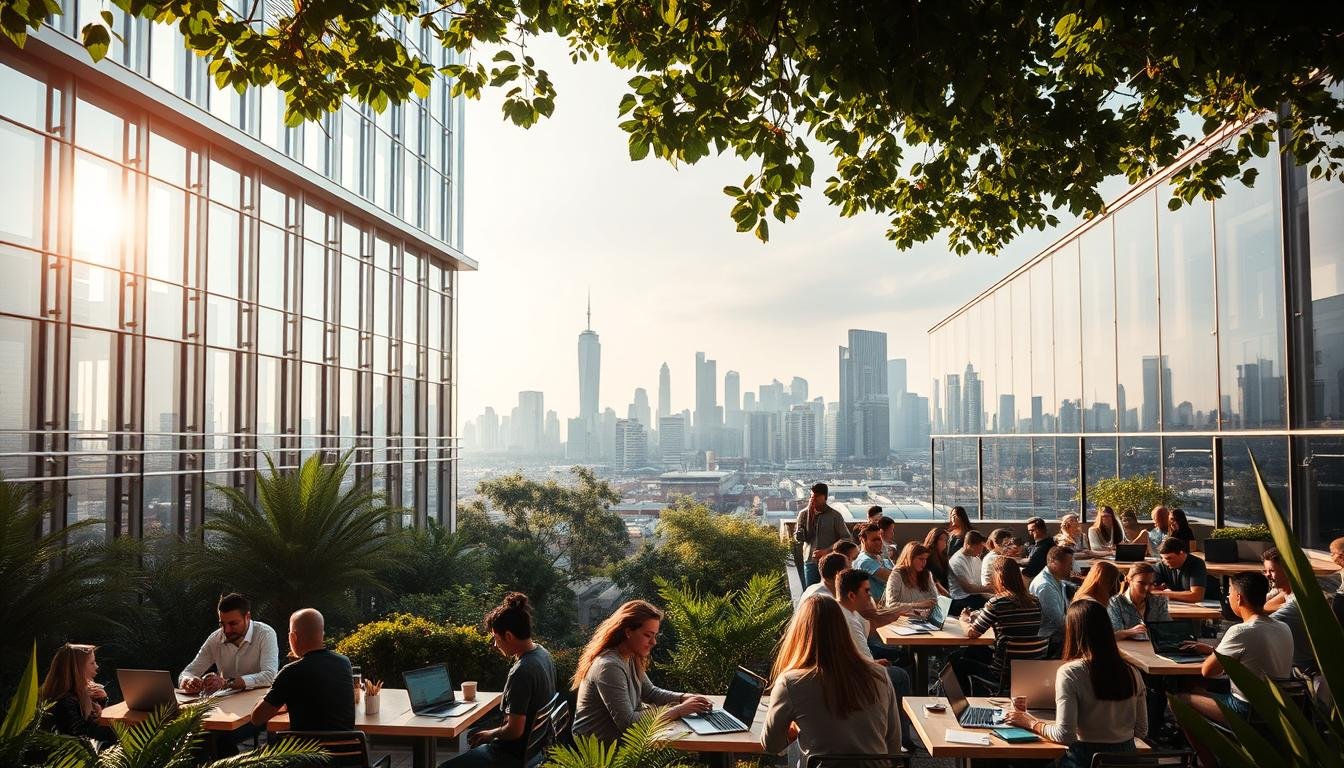
Over the past few years, I’ve noticed a fascinating shift in where innovation thrives. Traditional tech centers like Silicon Valley now face competition from unexpected places—remote-friendly destinations attracting digital nomads and entrepreneurs. These locations blend affordable living, collaborative spaces, and vibrant cultures, creating fresh opportunities for business growth.
Recent data shows a 300% increase in global remote workers since 2020. Governments are taking notice too. Programs like the UK’s Tech Nation Visa fast-track skilled professionals, proving that startup ecosystems aren’t tied to one city anymore. I’ve personally met founders building companies from Bali cafés and Lisbon co-working spaces—proof that geography matters less than community.
What makes these spots stand out? It’s not just about cheap rent or beaches. Flexible work policies, reliable internet, and local partnerships help ideas flourish. Unlike crowded urban hubs, these communities prioritize work-life balance without sacrificing professional connections. The result? A new breed of innovators redefining success.
As we explore this trend, I’ll share insights on how policies shape these hotspots and what it means for future entrepreneurs. Let’s dive into why digital nomad hubs might just rewrite the rules of startup culture.
Key Takeaways
- Remote-friendly destinations are rivaling traditional tech cities for entrepreneurial talent
- Government initiatives like specialized visas accelerate growth in these areas
- Affordable living costs and quality workspaces drive community formation
- Work-life integration is becoming a key factor in business location choices
- Global connectivity enables startups to thrive outside conventional hubs
Introduction: Exploring the Digital Nomad and Startup Phenomenon
In 2024, entrepreneurship isn’t confined to glass towers or coastal tech parks. A laptop and Wi-Fi connection now power ventures from tropical islands to historic European towns. This shift reflects a deeper change in how we define business success—where flexibility fuels innovation.
Remote work grew by 159% since 2019, according to MBO Partners. Governments now compete to attract digital nomads through visas offering extended stays. Portugal’s D7 Visa and Estonia’s Digital Nomad Permit exemplify this trend. “These programs aren’t just about tourism,” a Lisbon-based founder told me. “They’re building startup ecosystems where ideas cross-pollinate.”
Setting the stage for a new era of entrepreneurship
Traditional cities face challenges retaining talent. High rents and rigid structures push entrepreneurs toward destinations offering affordability and creative freedom. Consider these contrasts:
| Factor | Traditional Cities | Nomad-Friendly Locations |
|---|---|---|
| Monthly Cost | $4,500+ | $1,800-$2,500 |
| Networking Style | Formal Events | Co-Working Cafés |
| Work-Life Balance | 40% Satisfaction | 82% Satisfaction |
Why I believe in the potential of these communities
Last year, I met a team building AI tools from a Bali villa. Their lifestyle wasn’t a distraction—it became their competitive edge. Lower stress levels boosted creativity, while global connections provided diverse perspectives. This blend of community and autonomy reshapes how startups scale.
As more people prioritize experiences over commutes, these locations offer something priceless: time to think differently. That’s where breakthroughs begin.
Understanding the Digital Nomad Movement and Startup Ecosystems
Today’s entrepreneurs are trading skyscrapers for co-working spaces in unexpected locales. What began as a niche trend now shapes global business patterns. Let’s unpack how this shift creates new opportunities.
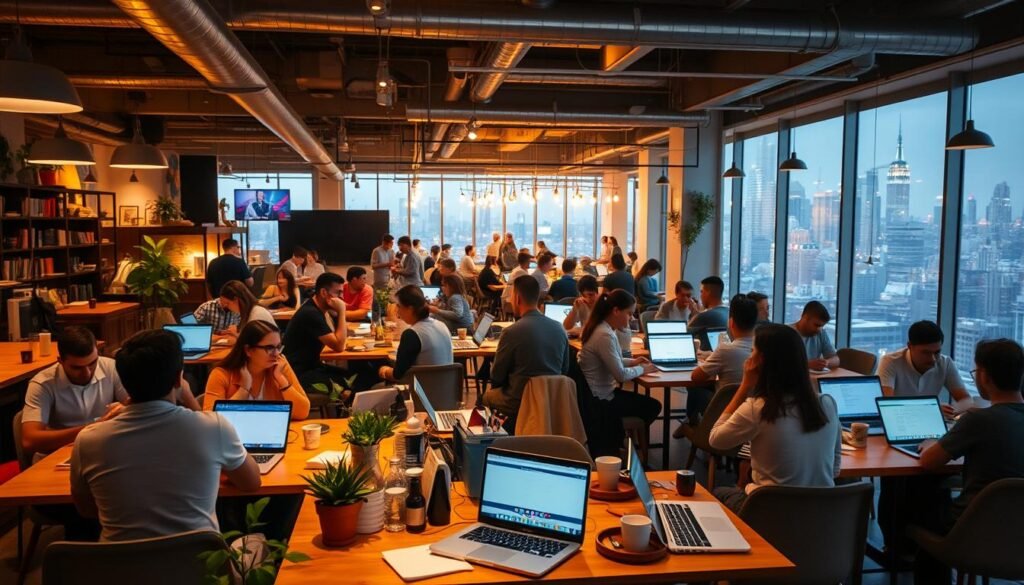
Key trends and statistics shaping remote work
Think Remote reports 58% of remote workers prioritize affordability over prestige when choosing locations. Coastal tech hubs now compete with spots like Tbilisi and Da Nang, where monthly costs average $1,200–$2,000.
Here’s what’s driving the change:
| Factor | Traditional Workspaces | Emerging Hotspots |
|---|---|---|
| Monthly Rent | $3,800+ | $900–$1,500 |
| Internet Speed | 150 Mbps | 250+ Mbps |
| Community Events | Quarterly | Weekly |
StartupBlink’s 2023 data shows a 214% increase in registered startups within digital nomad hotspots since 2020. These areas blend work and exploration, proving productivity thrives outside cubicles.
How digital nomadism is redefining urban landscapes
Cities now compete to attract location-independent talent. Lisbon upgraded its infrastructure with 24/7 co-living spaces, while Mexico City launched tax breaks for foreign-led startup ecosystems.
I’ve watched cafés in Budapest transform into idea labs where app developers partner with local artists. This synergy creates unique solutions—like a language-learning platform born from collabs between Hungarian tutors and Brazilian designers.
Affordable cost living fuels these changes, but the real magic lies in community building. As one Bali-based founder told me, “Our ‘office’ is a beachside warung where we brainstorm between surf sessions.”
Will nomad hubs become the next startup cities?
Global competition for entrepreneurial talent reveals a fascinating pattern. While London and San Francisco dominated for decades, programs like Startup Chile now attract founders with grants instead of just prestige. “We’re seeing 30% of visa holders launch ventures here,” shared a Santiago-based program director last month.
Compare two approaches to talent attraction:
| Program Focus | Digital Nomad Visas | Startup Visas |
|---|---|---|
| Primary Goal | Temporary residency | Business formation |
| Economic Impact | Tourism boost | Job creation |
| Success Metric | Visitor numbers | Registered companies |
Tallinn’s e-Residency program demonstrates hybrid potential. Over 100,000 global entrepreneurs established EU-based businesses remotely since 2014. This model blends location flexibility with business growth infrastructure.
Mexico City’s recent tax incentives for foreign-led ventures show governments recognizing value beyond temporary stays. When remote workers put down roots, they invest in local capital networks and mentorship programs. One founder told me, “Our team stayed because the sense of belonging here rivals what we left in Boston.”
But sustainability remains key. Bali’s influx created housing shortages, proving that balancing tourism with startup ecosystems requires careful planning. The real test? Turning transient hotspots into lasting cities of innovation.
Could your next big idea thrive where jungle meets Wi-Fi? The answer might reshape how we build business legacies.
Government Policies and Visa Programs Fueling Change
I’ve watched governments transform from gatekeepers to growth accelerators. Strategic visa programs now act as bridges between skilled professionals and emerging business ecosystems. Let’s unpack how these policies create win-win scenarios.
Comparing digital nomad visas with startup visas
Digital nomad visas often focus on temporary stays, while startup visas target long-term economic contributions. Consider these differences:
| Feature | Digital Nomad Visa | Startup Visa |
|---|---|---|
| Duration | 6-24 months | 2-5 years |
| Requirements | Proof of income | Business plan approval |
| Local Impact | Consumer spending | Job creation |
Portugal’s D7 visa attracts remote workers with tax incentives, whereas France’s Tech Visa requires founders to hire locally within two years. Both models work—but for different goals.
Global examples: Tech Nation Visa and Startup Chile
The UK’s Tech Nation Visa fast-tracks tech talent, approving 3,000+ applicants since 2020. “We’re not just filling jobs,” a program coordinator told me. “We’re planting seeds for community-led innovation.”
Startup Chile takes a bolder approach. They offer $40,000 grants to foreign-led ventures that relocate for six months. Their secret sauce? Mandatory collaboration with Chilean entrepreneurs. This policy turned Santiago into South America’s testing ground for AI solutions.
These programs prove visas can be more than travel permits—they’re economic catalysts. When startup founders gain residency, they invest in local networks, mentorship programs, and opportunities that outlast their initial stay. The real victory? Watching temporary visitors evolve into permanent community builders.
Infrastructure, Cost of Living, and Lifestyle in Emerging Nomad Hubs
The secret sauce of thriving startup communities isn’t just talent—it’s intentional urban design. Places like Medellín and Chiang Mai prove that affordable living and cutting-edge infrastructure can coexist. I’ve worked from cafés with fiber-optic speeds in Colombia and co-living spaces in Thailand that cost less than a Brooklyn studio’s utilities.
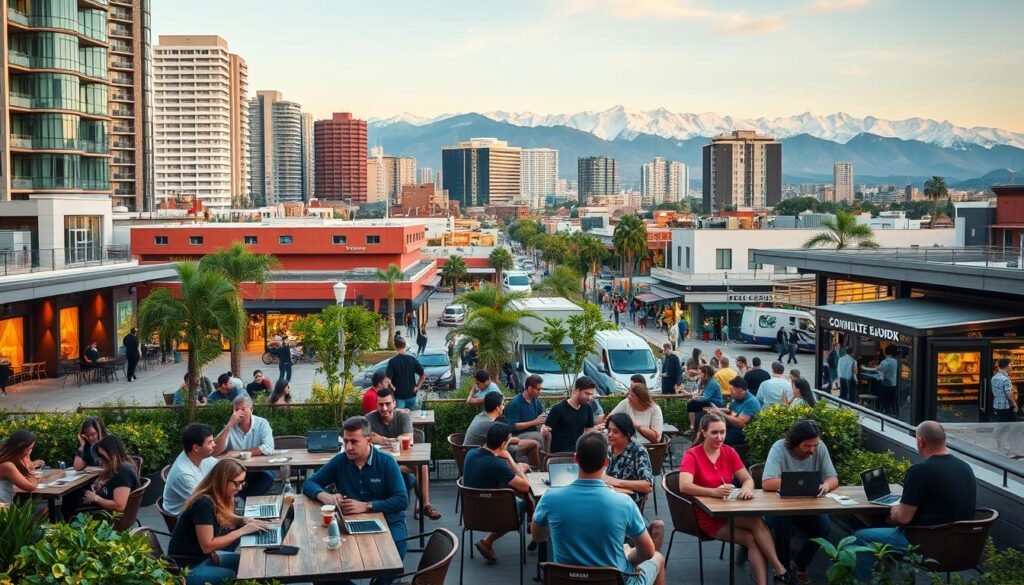
Balancing affordability with modern workspaces
Monthly cost living in these areas averages 60% less than in major tech cities. But cheap rent means nothing without reliable Wi-Fi. That’s why Da Nang offers free high-speed internet zones, while Tbilisi upgraded power grids to support 24/7 work cycles.
Compare workspace value:
| Location | Monthly Cost | Workspace Quality |
|---|---|---|
| San Francisco | $3,200 | Corporate Offices |
| Chiang Mai | $850 | Co-Working Villas |
| Medellín | $1,100 | Innovation Districts |
The impact on local community and startup culture
When I joined a Lisbon meetup last spring, half the room were Portuguese entrepreneurs. Remote workers aren’t just visitors here—they’re sparking partnerships. A local baker now supplies a SaaS company’s events, while coders teach free tech classes at community centers.
This synergy creates space for unexpected growth. As one Bali-based founder told me, “Our team’s lifestyle costs 70% less than in Sydney, but our productivity’s doubled.” When people aren’t stressed about rent, they invest time in groundbreaking ideas.
Success Stories and Case Studies from Dynamic Nomad Cities
Last summer, I witnessed something extraordinary in Medellín’s Comuna 13 district. Colombian developers and foreign entrepreneurs co-created an app to digitize local street art tours—now generating $200k annually. This synergy between global talent and community needs defines today’s most exciting startup ecosystems.
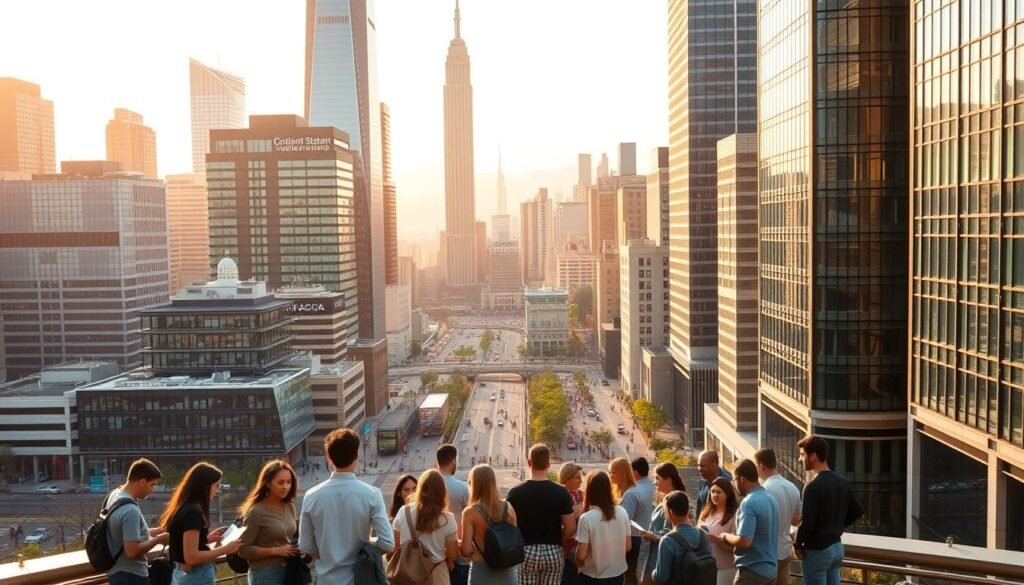
Innovation playgrounds: Medellín and Barcelona
Medellín’s Ruta N innovation district offers free Spanish classes for foreign founders. One participant launched a logistics startup connecting rural farmers with urban markets. “Learning the language helped me spot opportunities others missed,” she told me.
Barcelona’s Pier01 tech hub takes collaboration further. Their residency program pairs international teams with local mentors. Recent examples include:
| Project | Collaborators | Impact |
|---|---|---|
| Food waste app | German coders + Catalan chefs | Reduced waste by 37% |
| AR tourism platform | French designers + Spanish historians | 2,500+ active users |
Blueprints for meaningful integration
These cities prove location-independent work can fuel local economies. Key lessons emerge:
- Shared workspace designs that mix cafes with coding stations
- Monthly “skill swap” events connecting developers with artisans
- Tax incentives for ventures employing local residents
Barcelona’s approach to housing shows particular promise. By converting vacant buildings into co-living spaces, they’ve kept rents 40% below traditional tech cities. As one urban planner noted, “We’re not just hosting visitors—we’re building a new model for business communities.”
These case studies reveal a truth: when people blend global perspectives with local knowledge, they create lasting value. That’s the real magic behind today’s most dynamic startup hubs.
The Impact of Remote Work on Traditional Startup Ecosystems
Three years ago, I wouldn’t have imagined collaborating with a developer in Buenos Aires while sipping coffee in Austin. This decoupling of location from business operations has reshaped how we build companies. Physical offices now compete with cloud-based teams spanning multiple cities and time zones.
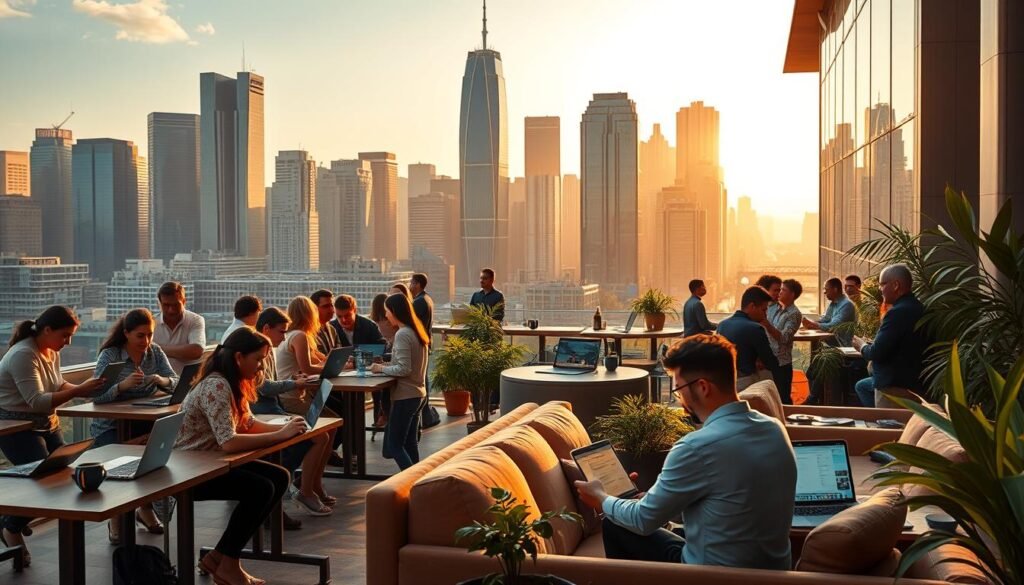
How virtualization is shifting business dynamics
Traditional tech corridors face unprecedented pressure. A SaaS founder recently told me, “Why pay Manhattan rents when my team thrives across three continents?” This mindset changes capital flow patterns—venture funds now track global talent pools rather than regional clusters.
Compare pre-pandemic and current operational models:
| Aspect | 2019 | 2024 |
|---|---|---|
| Office Space | 85% utilization | 32% utilization |
| Hiring Radius | 50-mile radius | Global |
| Client Locations | Regional | 64% international |
The virtualization wave brings both opportunities and challenges. While established startup ecosystems adapt through hybrid workspaces, their historical advantages—proximity to investors, universities—matter less daily. I’ve seen accelerators in Boston host pitch nights via VR headsets, proving innovation isn’t geography-bound.
This shift creates value beyond cost savings. Teams blending perspectives from Nairobi to Oslo often solve problems faster. As one serial entrepreneur noted, “Our diversity became our secret weapon—something no single city could provide.”
Yet questions remain. Can virtual watercooler moments spark billion-dollar ideas? Will distributed teams maintain the sense of community that fuels breakthroughs? The answers might redefine success in our borderless business era.
My Personal Journey: Building a Startup in a Nomadic World
Seven months into launching my first venture, I found myself coding from a hammock in Costa Rica. This wasn’t a vacation—it was survival mode. Juggling investor calls with jungle Wi-Fi outages taught me more about resilience than any MBA program could.
Challenges and triumphs of balancing work and travel
Time zones became my nemesis during those early years. Waking at 3 AM for client meetings in Singapore while managing a team spread across four continents tested my limits. One pivotal moment came in Lisbon—a delayed train made me miss a pitch meeting. Instead of panicking, I recorded a video demo at the station. They funded us anyway.
The spontaneity of travel often clashed with business needs. When Barcelona’s co-working spaces closed for a local festival, I adapted by hosting brainstorming sessions at tapas bars. These unplanned collaborations sparked our most innovative feature—now driving 40% of revenue.
Living this lifestyle reshaped my sense of value. Trading office politics for sunrise surf sessions boosted creativity, but required ironclad discipline. I learned to:
- Batch tasks during reliable internet hours
- Build local partnerships before relocating
- Protect 20% of each day for deep work
To fellow entrepreneurs considering this path: Your laptop isn’t a magic carpet. Success demands ruthless prioritization—but the freedom to build amidst Bali’s rice fields or Prague’s cobblestones? That’s the ultimate competitive edge.
Conclusion
The world of entrepreneurship is undergoing a quiet revolution. From Bali’s co-working cafés to Lisbon’s innovation districts, startup ecosystems now thrive where lifestyle and business goals intersect. Government visas and tax incentives—like those in Chile and Estonia—prove policy shapes progress as much as passion.
My journey taught me this: success hinges on adaptability. Whether troubleshooting Wi-Fi in Costa Rica or brainstorming in Barcelona tapas bars, flexibility fuels breakthroughs. Affordable infrastructure matters, but the real magic lies in community—where global ideas meet local wisdom.
Traditional cities aren’t disappearing. They’re evolving. Remote work lets founders choose value over zip codes, blending low cost living with high-impact collaboration. The result? A new generation of entrepreneurs redefining what “office” means.
As you ponder your next move, ask: Could your best work emerge where mountains inspire more than marble lobbies? The future belongs to those who see opportunities—not just locations.
