A Year of Transformation in the Land of Smiles
The Digital Nomad’s Thailand
A Year of Transformation in the Land of Smiles
Listen to Thailand’s 2025 Digital Nomad Visa Overview
The Journey Begins
The humid Bangkok air hit Maya’s face like a warm embrace as she stepped off the plane at Suvarnabhumi Airport. A 28-year-old software developer from Berlin, she had traded her corporate cubicle for something far more uncertain yet infinitely more promising—a year-long adventure in Thailand that would reshape everything she thought she knew about work and life.
The chaos of Bangkok’s traffic, the symphony of tuk-tuk horns, and the aromatic whirlwind of street food vendors created an overwhelming sensory explosion. In that moment, clutching her laptop bag and watching the organized chaos unfold around her, Maya realized her life was about to change forever.
Thailand’s revolutionary Long-Term Resident (LTR) visa had transformed the digital nomad landscape in 2025. For 50,000 Thai Baht (approximately $1,500 USD), remote workers could now secure a 10-year multiple-entry visa that opened doors to a lifestyle once reserved for backpackers and retirees. With Thailand ranking 13th globally for fixed broadband speeds and fiber optic networks delivering 500+ Mbps in major cities, the infrastructure now matched the dream.

Chapter 1: Bangkok – Electric Dreams and Urban Awakening
Maya’s first month in Bangkok unfolded like a carefully choreographed dance between chaos and order. Living in a modern condo in the Sukhumvit area, her mornings began with the familiar sounds of street vendors calling out in melodic Thai, tuk-tuks puttering past her window, and the distant hum of the BTS Skytrain carrying millions of people to their daily destinations.
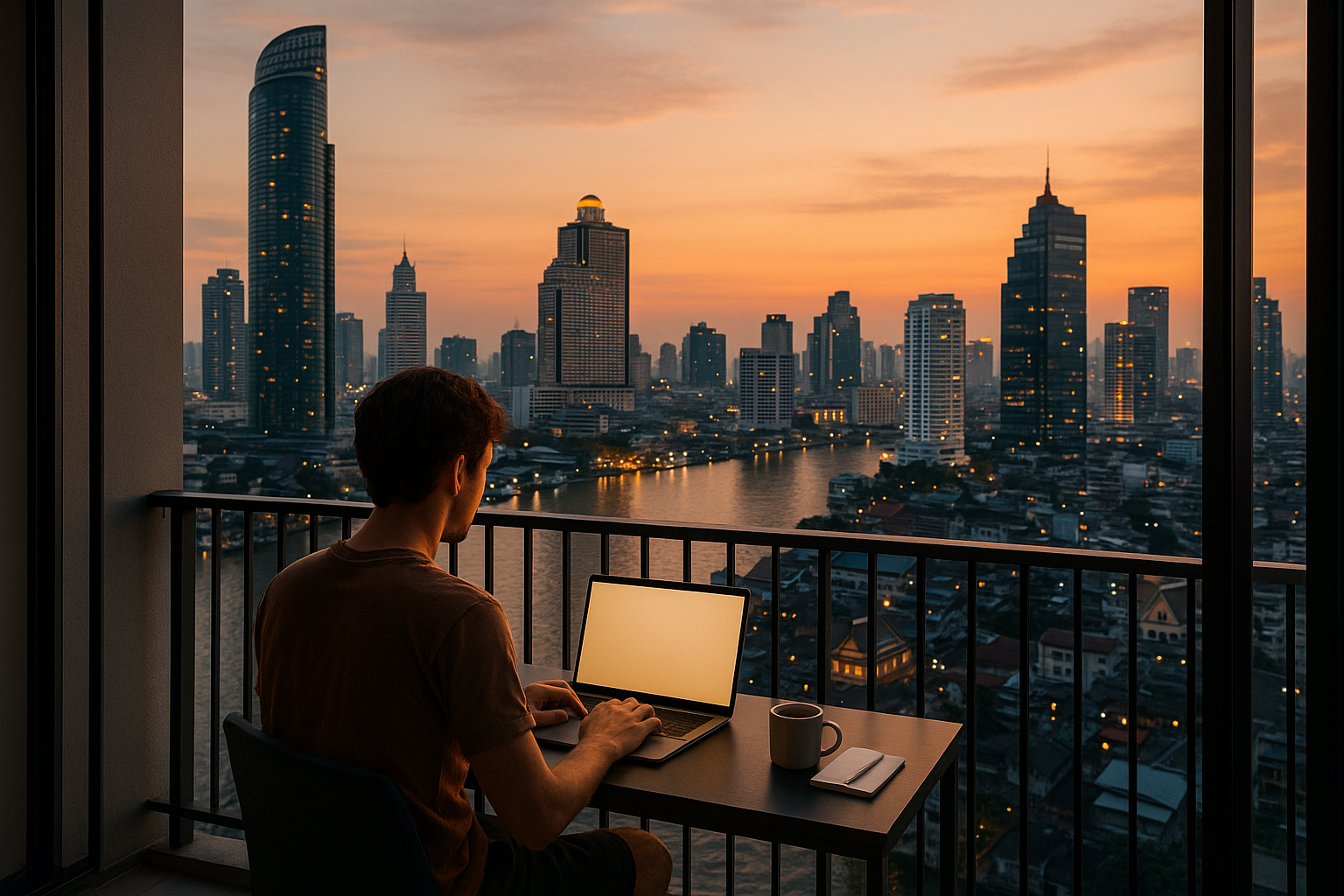
Her routine became a meditation in itself: grabbing coffee from the local cart where the elderly vendor, Khun Somchai, began remembering her order in broken English mixed with warm smiles. Then she’d ascend to her workspace on the 25th-floor balcony, laptop open, overlooking the majestic Chao Phraya River where traditional long-tail boats shared the waterway with modern water taxis.
Bangkok’s digital nomad ecosystem revealed itself as surprisingly sophisticated. Sleek coworking spaces like WeWork and The Hive buzzed with international professionals collaborating on projects spanning time zones. Maya found herself coding alongside entrepreneurs from Singapore, designers from Sweden, and marketers from Mexico, all united by the freedom of location independence.
Experience Bangkok’s authentic street sounds
Maya’s Bangkok Budget
- Accommodation: $600
- Food: $400
- Coworking: $150
- Transport: $50
- Entertainment: $100
- Total: $1,800/month
A day in the life: Bangkok digital nomad experience
The electric energy of Bangkok revealed itself in contrasts that never ceased to amaze her. From her balcony, she could see the golden spires of Wat Arun glinting in the morning sun while glass towers of the business district reflected the changing light throughout the day. The night markets became her evening sanctuary, where she discovered som tam (papaya salad) and mango sticky rice—initially skeptical but soon completely addicted to the perfect balance of sweet, sour, and spicy flavors.
WhatsApp groups became her social lifeline: “Bangkok Digital Nomads” for work connections, “Expat Women Thailand” for safety tips and friendship, and “Startup Founders BKK” for networking opportunities. These digital communities provided the social framework that transformed a foreign city into a supportive home base.
Yet challenges emerged alongside the excitement. The language barrier created daily puzzles, from ordering food to explaining technical issues to her internet provider. Bangkok’s April heat proved overwhelming, driving her to air-conditioned malls during the peak afternoon hours. Learning to navigate Thai bureaucracy for her visa extension tested her patience, and video calls with friends back in Berlin’s winter sometimes triggered unexpected waves of homesickness.
Chapter 2: Chiang Mai – Finding Soul in the Mountains
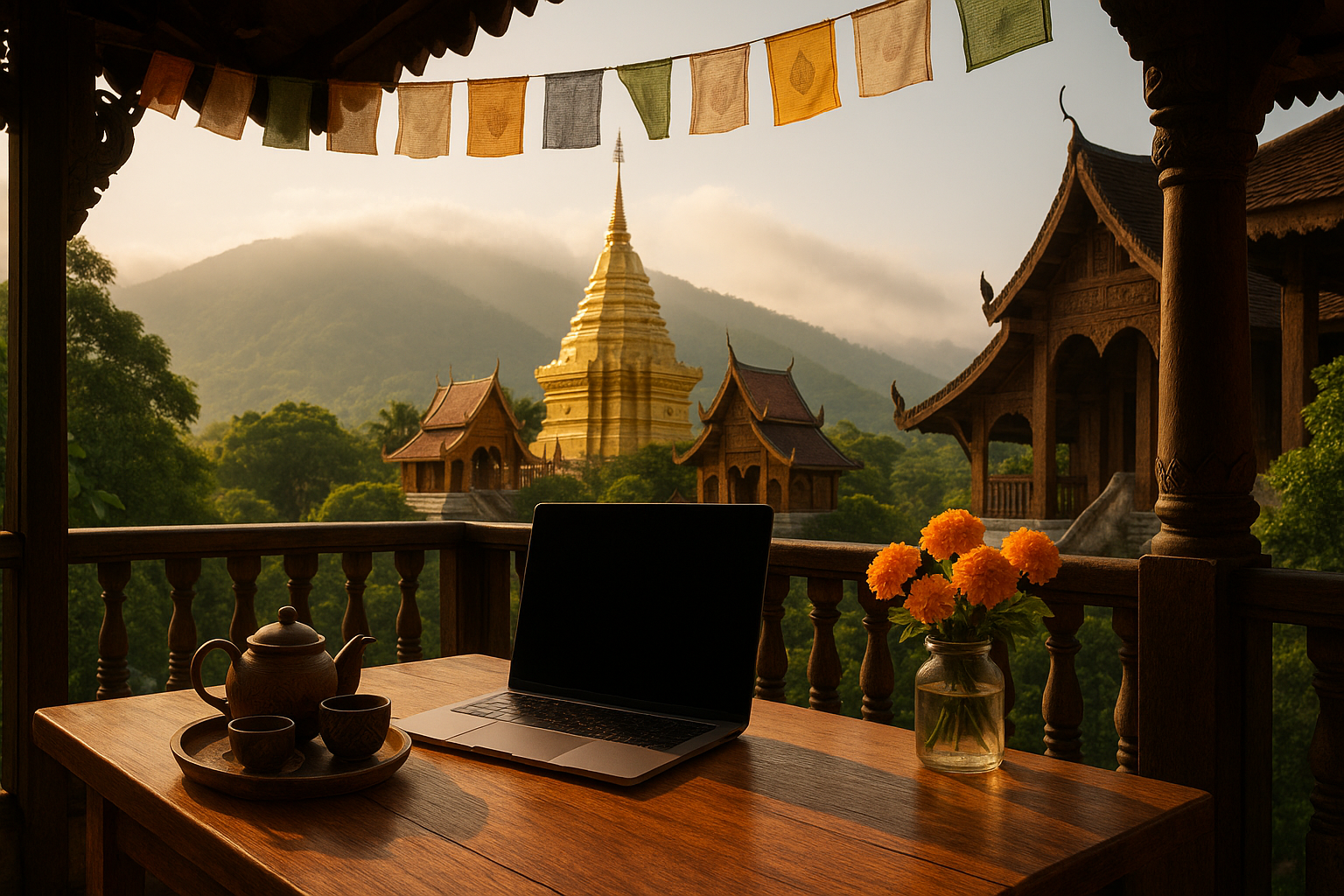
Working from traditional cafes with Doi Suthep views
Maya’s transition to Chiang Mai in May felt like stepping into a different Thailand entirely. Escaping Bangkok’s relentless heat, she dove into Northern Thailand’s spiritual heart, where the pace of life moved in harmony with ancient rhythms rather than modern urgency.
Her first morning in a traditional guesthouse near the Old City awakened her to new possibilities. The sound of monks chanting at Wat Chedi Luang drifted through her window, mixing with the morning mist rolling over Doi Suthep mountain. This wasn’t just a change of location; it was a shift in consciousness.
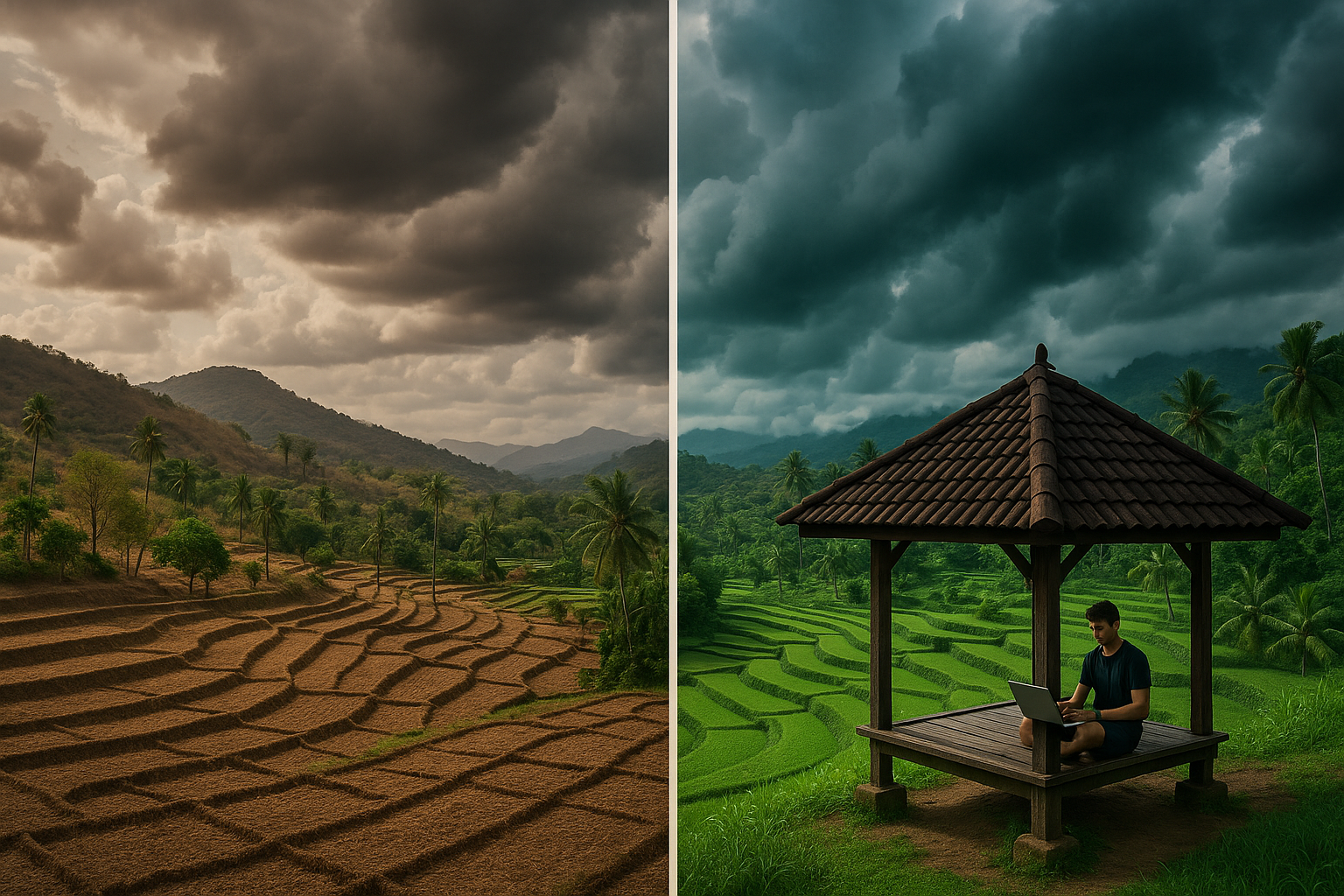
Her new routine centered around working from carefully chosen cafes like Ristr8to and Akha Ama Coffee, where baristas crafted single-origin Thai coffee with precision that rivaled European standards. Her laptop setup often overlooked rice terraces during the rainy season, when the landscape transformed from brown to emerald green almost overnight—a visual metaphor for her own transformation.
Cultural immersion became Maya’s priority. Thai cooking classes revealed the delicate balance of sweet, sour, salty, and spicy that makes authentic pad thai an art form. Weekend temple visits taught her to wai respectfully and introduced her to meditation practices that began influencing her work productivity in unexpected ways. The Sunday Walking Street market became her weekly adventure, buying handmade textiles while practicing her growing Thai vocabulary with patient vendors.
The nomad community in Chiang Mai differed markedly from Bangkok’s hustle. More introspective and focused on personal growth, Maya joined hiking groups exploring hidden waterfalls, attended collaborative co-working sessions at Punspace, and even participated in her first Vipassana meditation retreat—an experience that challenged her relationship with technology and constant connectivity.
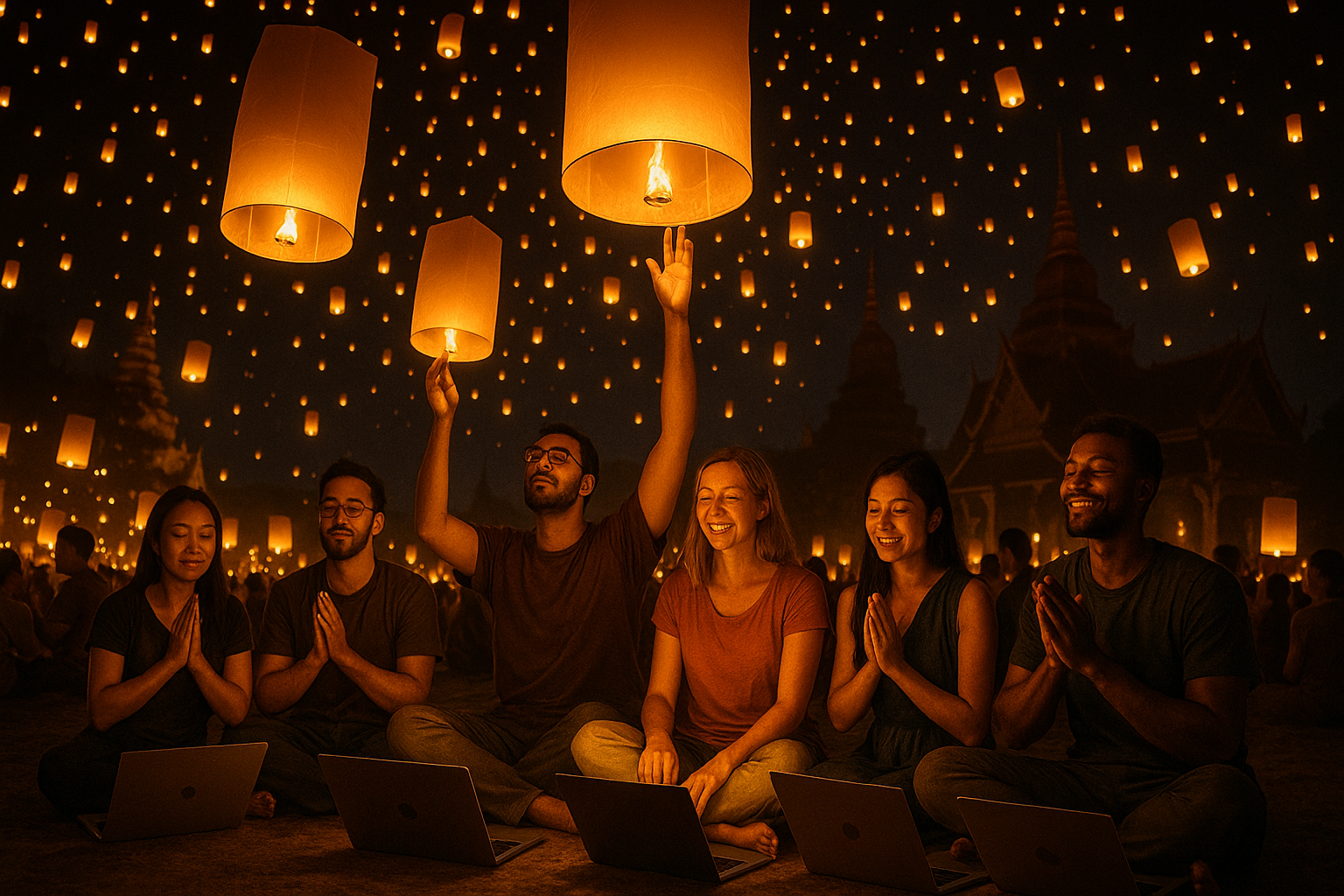
Yi Peng lantern festival – a moment of transformation
Immersive Thai cultural soundscape
The Yi Peng lantern festival in November became Maya’s pivotal moment. Surrounded by thousands of glowing lanterns rising into the dark sky like earthbound stars returning home, she experienced a profound realization. The wishes she wrote on her lantern were no longer about escaping her old life but about embracing this new one completely. She wasn’t just traveling anymore; she was transforming.
Chapter 3: Coastal Adventures – Pattaya and Hua Hin Contrasts
December brought Maya to Thailand’s coast, where two dramatically different experiences awaited. First, Pattaya challenged every preconception she’d harbored about the notorious beach town. Beyond its well-known reputation, she discovered a thriving expat community, reliable internet infrastructure, and beachfront cafes perfect for morning coding sessions.
Her routine at Workspace Cafe became almost meditative: laptop open facing the Gulf of Thailand, long-tail boats dotting the horizon as she tackled client projects with the sound of waves providing a natural soundtrack. The nightlife scene wasn’t her preference, but the international community proved surprisingly diverse—entrepreneurs from Singapore, developers from Ukraine, marketers from Australia, all drawn by the same combination of affordability and connectivity.
Beach volleyball games at sunset, weekend trips to nearby islands, and the revelation that some of her most productive work happened with sand between her toes—Pattaya offered lessons in flexibility and challenging assumptions.

Productive beachfront workspace in Pattaya
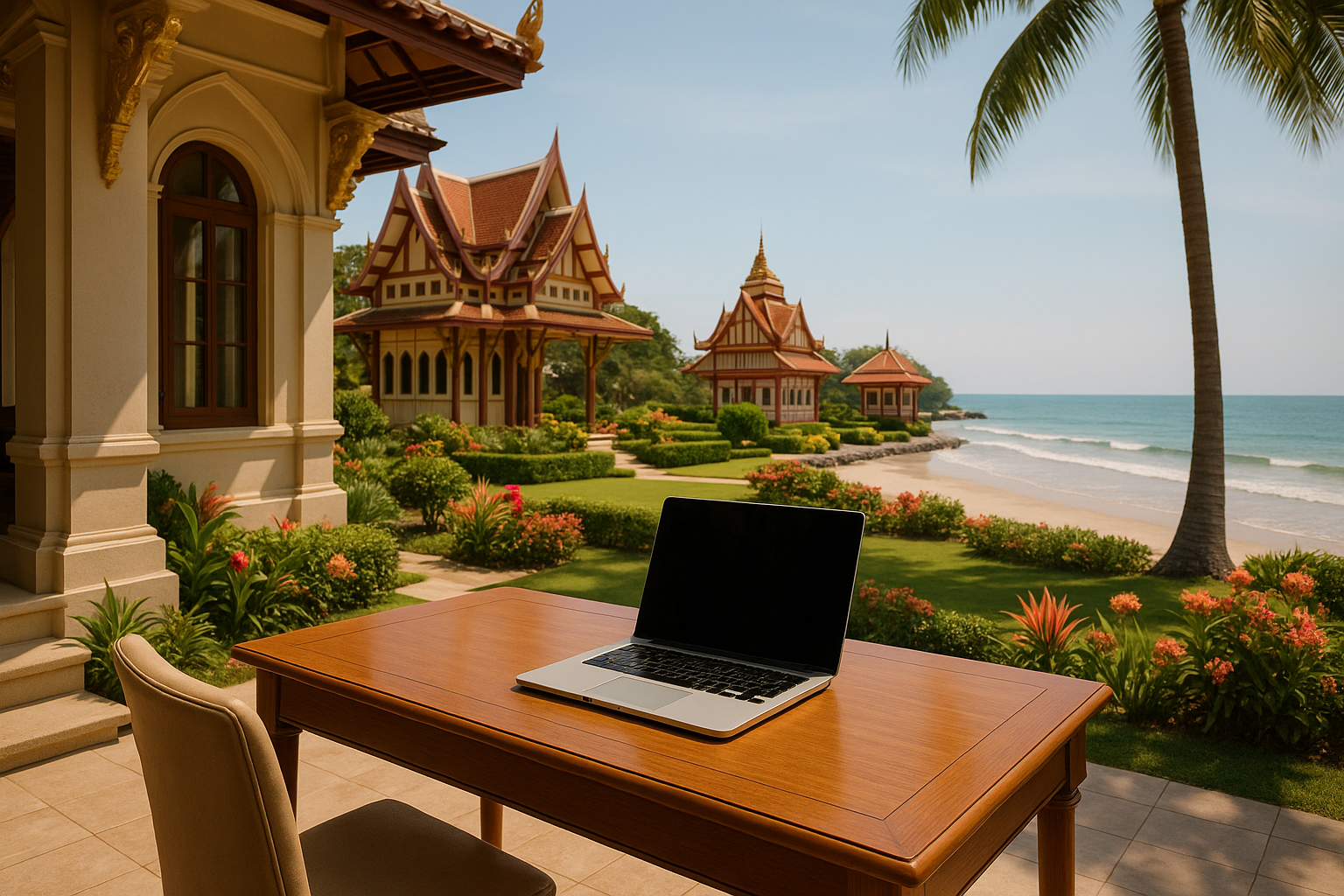
Royal elegance meets remote work in Hua Hin
Hua Hin represented Thailand’s refined coastal living. Staying near the royal palace grounds, Maya experienced Thailand’s more elegant side. Early morning jogs along pristine beaches, working from boutique cafes with views of the iconic Hua Hin Railway Station, and evening walks through night markets where vendors sold fresh seafood and royal-inspired crafts.
The pace here moved differently—slower, more contemplative. Higher costs ($300 more monthly than Chiang Mai) seemed justified by the peaceful environment and proximity to Bangkok for client meetings. She began understanding why Thai royalty had chosen this particular stretch of coastline as their retreat.
The contrast between Pattaya’s energetic diversity and Hua Hin’s serene sophistication taught Maya that Thailand’s coastal offerings were as varied as its inland regions. Each location demanded different aspects of adaptation and offered unique rewards to those willing to embrace their distinct characters.
Chapter 4: Seasonal Rhythms and Cultural Integration
Thailand’s dramatic seasonal transformation time-lapse
Hot Season (Mar-May)
Temperatures soar to 40°C. Many nomads retreat to air-conditioned malls and mountain areas. Songkran festival brings joyful water fights.
Rainy Season (Jun-Oct)
Lush landscapes emerge. Afternoon storms require flexibility. Internet cafes become popular backup workspaces.
Cool Season (Nov-Feb)
Perfect weather for outdoor work. Yi Peng and Loy Krathong festivals. Peak tourist and nomad season.
Maya learned to embrace Thailand’s three distinct seasons and their profound impact on nomadic life. The hot season (March-May) drove many nomads to air-conditioned malls and mountain retreats, while the rainy season (June-October) brought lush landscapes alongside flooding challenges that taught valuable lessons in flexibility and patience.

Embracing Songkran – from tourist to temporary local
Her first Songkran celebration in April marked a crucial transition. Initially terrifying as strangers soaked her with water guns and buckets, the experience became liberating as she joined the chaos, laptop safely stored, embracing the pure joy of Thailand’s most beloved festival. This was the moment she realized she’d stopped being a tourist and started becoming a temporary local.
Language progression became a source of pride: from pointing at menu items to having basic conversations with her landlord’s grandmother. Cultural missteps became learning experiences—wearing revealing clothes to temples, pointing with her feet, not removing shoes appropriately. Each mistake was met with gentle correction and warm smiles that taught grace in learning.
The visa renewal process in her second year highlighted the LTR visa’s revolutionary impact. Gone was the stress that plagued earlier generations of nomads who faced visa runs every 90 days. The 10-year validity provided freedom to truly settle, invest in relationships, and contribute to local communities rather than constantly planning exit strategies.
Health considerations became routine rather than crises: finding international-standard healthcare in Bangkok hospitals, navigating dengue fever season with proper precautions, and discovering traditional Thai massage as both therapy and cultural experience. Quality health insurance covering both routine care and emergencies provided peace of mind that allowed full engagement with the experience.
Chapter 5: The Economics of Paradise
Cost Comparison: Thailand vs Berlin
Maya’s economic analysis revealed purchasing power that transformed her entire financial outlook. Her freelance income, which provided a comfortable but constrained lifestyle in Berlin, stretched 2-3 times further in Thailand while her quality of life improved dramatically.
The breakdown across her Thai journey painted a clear picture:
- Bangkok: $1,800/month comfortable, $2,300 for luxury living
- Chiang Mai: $900/month basic, $1,200 for premium experiences
- Pattaya: $1,200/month including beach activities
- Hua Hin: $1,500/month for royal town elegance
Income considerations became clearer through community connections. Most successful nomads earned $3,000+ monthly from remote work, freelancing, or online businesses. The LTR visa required proof of $15,000 in savings, but practical monthly needs were significantly lower, allowing for both comfortable living and substantial savings.
The psychological cost of distance from family during emergencies remained the most challenging hidden expense—one that couldn’t be calculated in dollars but required careful consideration in any long-term planning.
Cultural Integration and Community
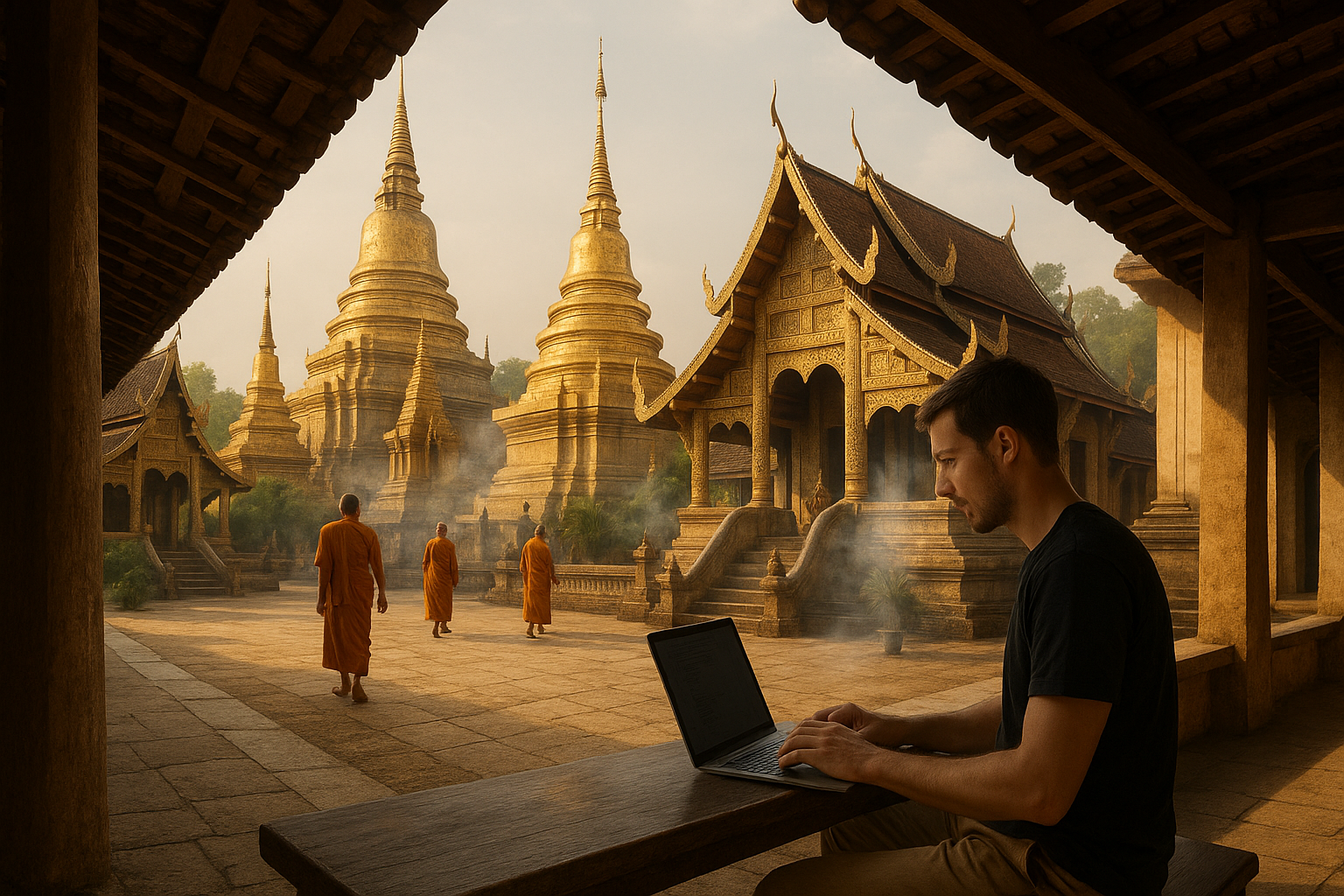
Respectful integration with Thailand’s spiritual heritage
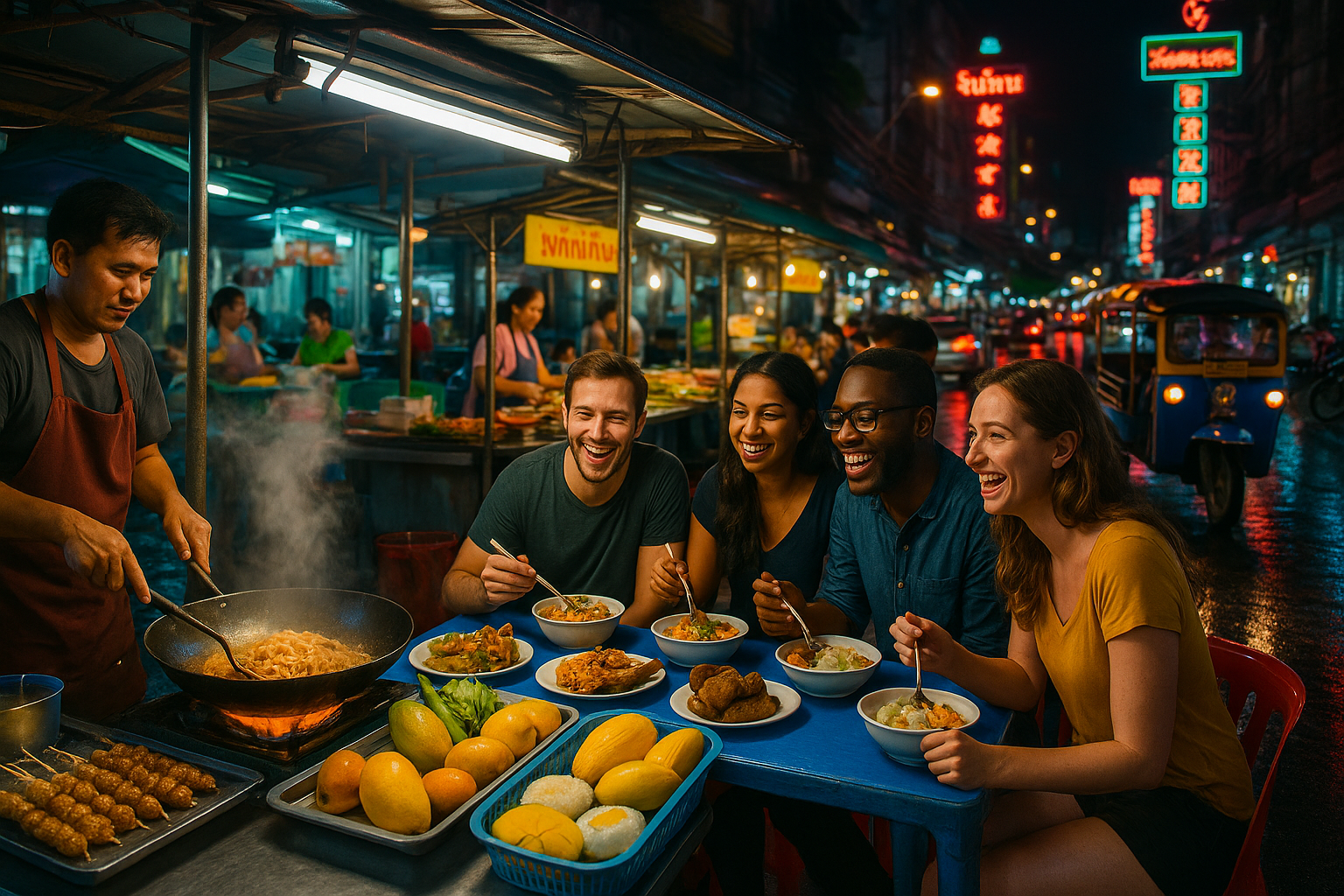
Building community through shared meals and experiences
Maya’s deepest growth came through community integration rather than solo exploration. The international nomad networks provided professional connections and social support, while local relationships offered cultural authenticity and language practice. Street food vendors who remembered her preferences, coworking space staff who became friends, and temple communities that welcomed respectful participation—these relationships transformed Thailand from a temporary destination into a temporary home.
Conclusion: A Year Transformed
Thailand’s diverse nomad destinations – a year-end reflection
As Maya’s first year concluded, her reflection revealed a fundamental truth: she was no longer the same person who had stepped off that plane in Bangkok twelve months earlier. The skills gained extended far beyond professional development—adaptability, cultural sensitivity, language basics, independence, and a global perspective that had transformed her entire approach to work and life.
The decision point arrived with crystalline clarity: extend the LTR visa for another year or return to Germany? The realization that “home” had become a more fluid concept challenged everything she’d previously understood about belonging and identity.
Thailand hadn’t simply been a destination offering affordable living and reliable wifi—it had become a lens for seeing the world and her place within it differently. The transformation was complete not because the journey had ended, but because it had fundamentally changed her definition of what journey meant.
Key Transformations
- Professional growth through cultural adaptation
- Language skills and cultural competency
- Financial freedom through geographic arbitrage
- Global network of professional relationships
- Expanded definition of home and belonging
- Sustainable remote work practices
The final scene found Maya back on her familiar Bangkok balcony, but now planning her second year with confidence rather than uncertainty. Thailand had offered more than just affordable living and reliable wifi—it had offered transformation.