
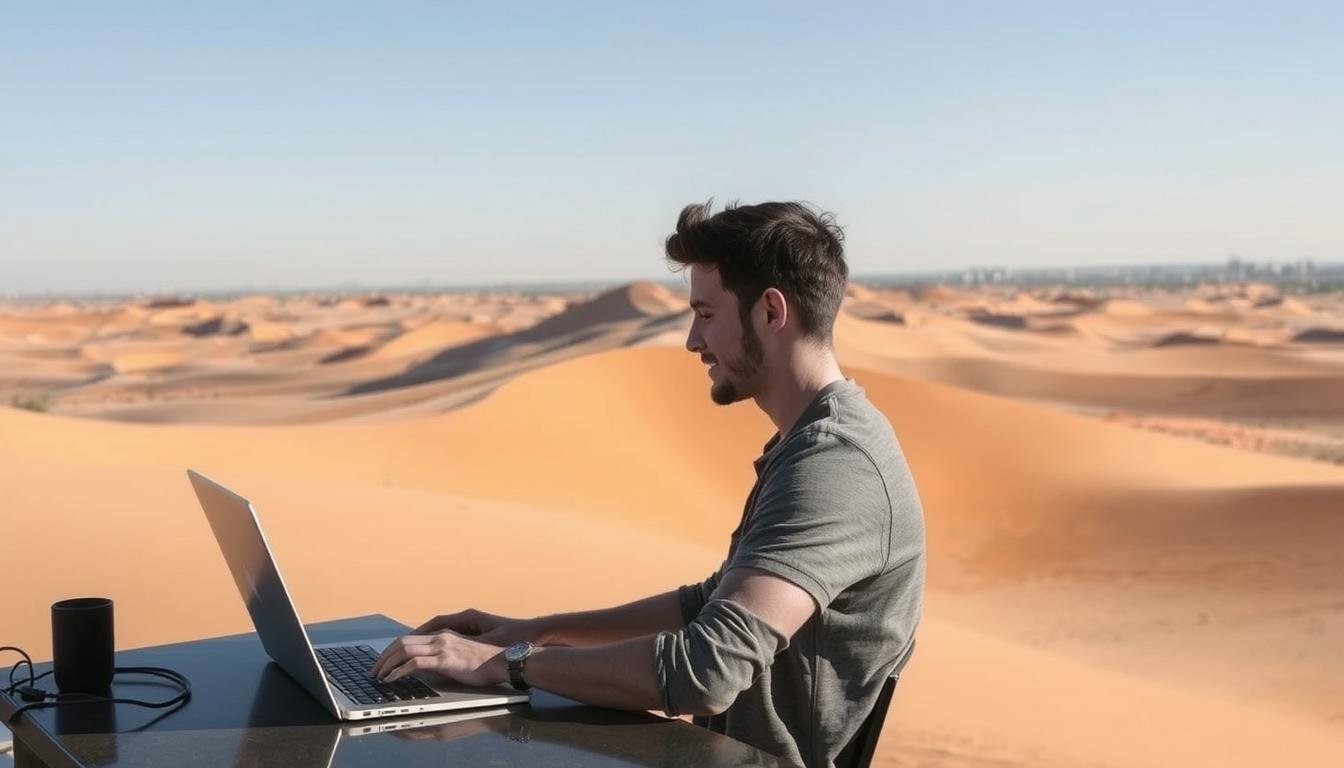
Did you know Namibia offers fiber internet speeds rivaling major U.S. cities? This surprising fact makes it a top choice for location-independent professionals. I discovered this firsthand while working against the backdrop of fiery orange dunes.
The country’s six-month special visa program creates the perfect blend of adventure and productivity. Coastal towns like Swakopmund provide reliable infrastructure, while desert landscapes offer unmatched inspiration.
What sets this destination apart is its balance. Mornings are for video calls, afternoons for climbing towering sand formations. The cost of living stays reasonable, especially outside tourist hotspots.
Key Takeaways
- Fast internet speeds available in urban areas
- Unique visa program lasting half a year
- Affordable living costs compared to Western standards
- Stunning natural landscapes near work hubs
- Growing community of remote professionals
Why Choose Namibia as a Digital Nomad?
Reliable Wi-Fi meets red sand dunes in one of Africa’s most stable nations. The country blends adventure with productivity, offering fiber-optic speeds in cities and satellite options in remote areas. Mornings here mean video calls with oryx grazing outside your window.
Breathtaking Landscapes Meet Reliable Connectivity
Diverse landscapes inspire creativity while you work. Urban hubs like Windhoek boast 19.89 Mbps average speeds, perfect for seamless Zoom meetings. Need a change of scenery? The world’s tallest dunes are just a drive away.
| Feature | Rating (5.0 scale) |
|---|---|
| Internet Infrastructure | 3.0 |
| Cost of Living | 4.0 |
| Road Network (Paved) | 94% |
Political Stability and Safe Environment
Known for its political stability since 1990, the country ranks safer than neighbors. English as the official language simplifies paperwork, and 94% paved roads make travel easy. Crime rates stay low, letting you focus on work—not safety concerns.
Transparent visa processes add to the appeal. Whether you’re in a coastal town or desert camp, you’ll find a welcoming community of remote professionals.
Namibia’s Digital Nomad Visa: What You Need to Know
Securing a visa for remote work here involves straightforward steps but requires careful preparation. The six-month permit blends work and exploration, though applicants must prove stable income and remote employment status.
Eligibility and Financial Thresholds
Solo applicants need $2,000/month in earnings, while families require $1,000 per spouse and $500 per child. Submit proof via six months of bank statements or client contracts. Avoid using personal savings as primary evidence—officials prefer recurring income streams.
5-Step Application Walkthrough
- Gather documents: Bank statements, employment proof, and a passport valid for six months.
- Draft a concise motivation letter. *Pro tip:* Link your work to local tourism or conservation.
- Email scanned files to nomadvisa@nipdb.com. Label attachments clearly (e.g., “Smith_Proof_Income.pdf”).
- Pay the $124 fee via EFT. Include your full name in the transaction reference.
- Await approval (4–6 weeks). Follow up politely if delayed beyond eight weeks.
Common pitfalls: Vague motivation letters or incomplete documents trigger rejections. South Africa’s program demands higher earnings ($3,000/month) but allows renewals—unlike this non-renewable visa.
Setting Up Your Nomad Life in Namibia
Setting up a temporary home here offers more than just a place to sleep—it’s a gateway to exploration. Whether you crave urban convenience or desert solitude, options cater to every remote worker’s lifestyle.
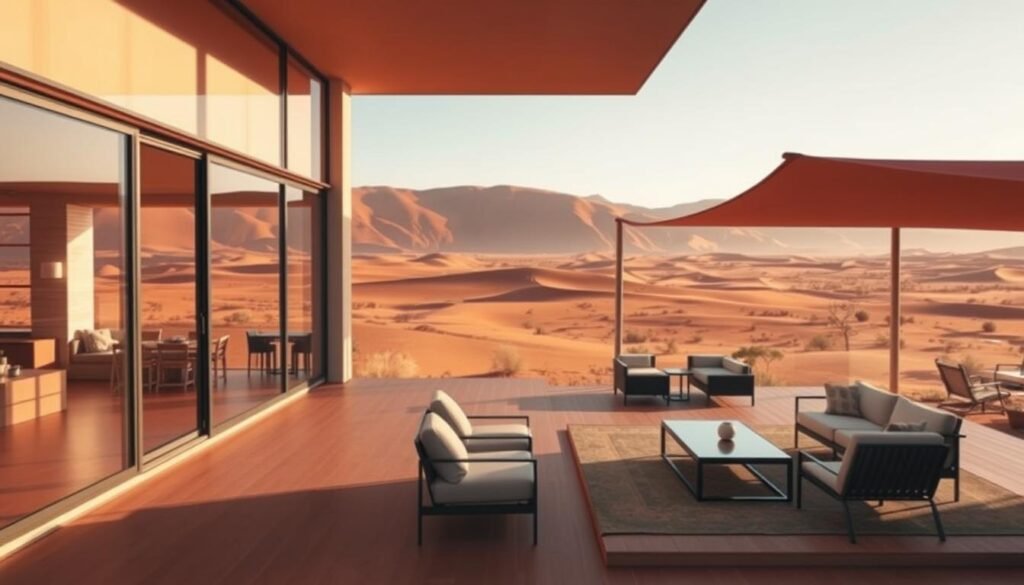
Finding Accommodation: Lodges to Remote Camps
Windhoek’s modern apartments average N$6,687.50 ($366.94) per month. Compare these to coastal lodges with built-in workspaces:
- Urban co-living spaces: Fast Wi-Fi, cafes, and coworking hubs.
- Desert eco-lodges: Solar-powered with satellite internet for off-grid stays.
Pro tip: Book a week in each to test connectivity before committing long-term.
Transportation: Renting a Car for Epic Road Trips
A car rental unlocks this country’s vast landscapes. Opt for a 4×4 from Car Rental Association-approved providers if visiting Sossusvlei’s dunes.
- Check for sand-driving gear (tire deflators, recovery boards).
- Fuel costs ~N$20.50/liter ($1.12)—budget extra for remote routes.
- Subscribe to a roadside assistance network for peace of mind.
For remote workers staying a month+, consider mail forwarding services to handle deliveries.
Top Destinations for Work and Adventure
Balancing productivity and adventure is effortless in these diverse locations. Whether you crave city buzz or desert solitude, each spot offers reliable Wi-Fi and unforgettable views.
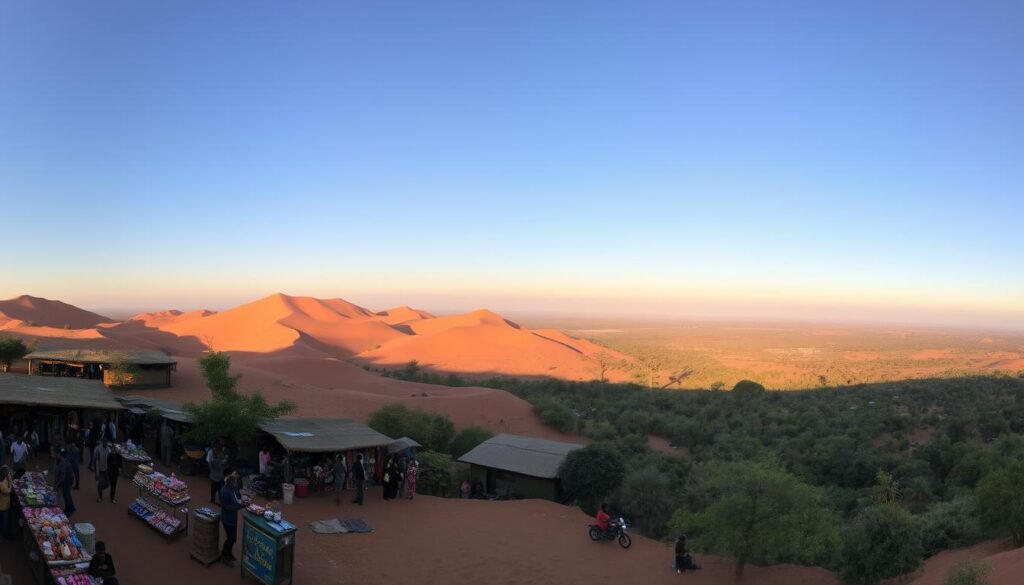
Windhoek: The Urban Hub with Modern Amenities
Windhoek blends colonial charm with 21st-century convenience. Coworking spaces near the Christuskirche landmark buzz with remote professionals. After work, dive into Katutura’s 3-hour historical tours for a local experience.
“I edited client videos by day and tasted kapana (street food) by night—Windhoek’s rhythm is addictive.”
Sossusvlei and Beyond: Desert Wonders
The Namib’s dunes glow at sunrise, perfect for a pre-dawn productivity session at Deadvlei. Pack solar chargers—remote camps like NamibRand (a Dark Sky-certified destination) rely on sustainable power.
| Location | Work Perks | Adventure Highlights |
|---|---|---|
| Windhoek | 19.89 Mbps avg. speed | Katutura cultural tours |
| Sossusvlei | Satellite internet | Dune 45 sunrise climbs |
Prefer coastal vibes? Swakopmund’s German-style cafes offer ocean views and strong espresso. For a wilder experience, Etosha National Park lets you join safari drives between calls—just mind the elephants.
Cost of Living: Stretching Your Dollars
Your dollar stretches further in this African gem than you might expect. The cost of living stays reasonable, especially if you adapt to local habits. I comfortably managed on $2,000 per month while enjoying occasional luxuries.
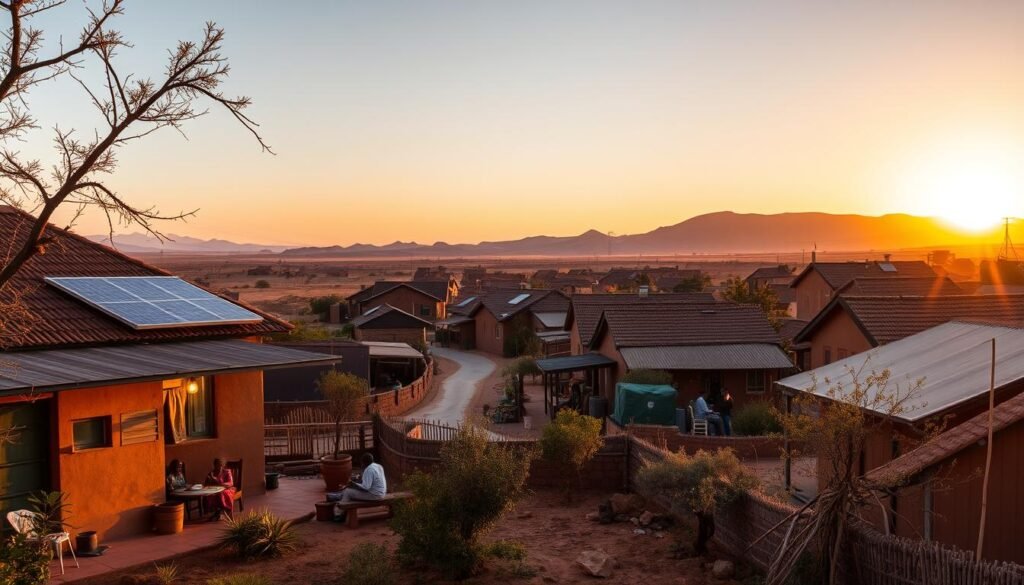
Monthly Budget Breakdown
Utilities average N$1,650.70 ($90.57) per month for a one-bedroom apartment. Add N$159.85 ($10.75) for a prepaid SIM card with generous data. Here’s how I allocated funds:
- Housing: 40% for urban apartments or desert eco-lodges
- Food: 25% (local produce costs half of imported goods)
- Transport: 15% for fuel or rental cars
- Entertainment: 20% for adventures and coworking spaces
“Hosting weekly braais (BBQs) became my favorite budget-friendly social activity—meat costs less than $5/kg!”
Affordable Luxuries: Food and Entertainment
Groceries from local markets slash food costs by 60% compared to imported items. For nights out, braai spots offer full meals under the stars for $8. Free attractions like the National Botanical Garden provide perfect midday breaks.
When exchanging money, bank rates beat airport kiosks by 10-15%. Keep some South African rand (ZAR) too—many shops accept it at 1:1 with the local dollar (NAD). These small hacks help your stay remain affordable without sacrificing experiences.
Navigating Namibia’s Digital Infrastructure
I tested every connectivity option across different regions—here’s what actually works. From urban hubs to skeleton coast camps, staying online requires knowing where to find reliable internet and how to prepare for dead zones.
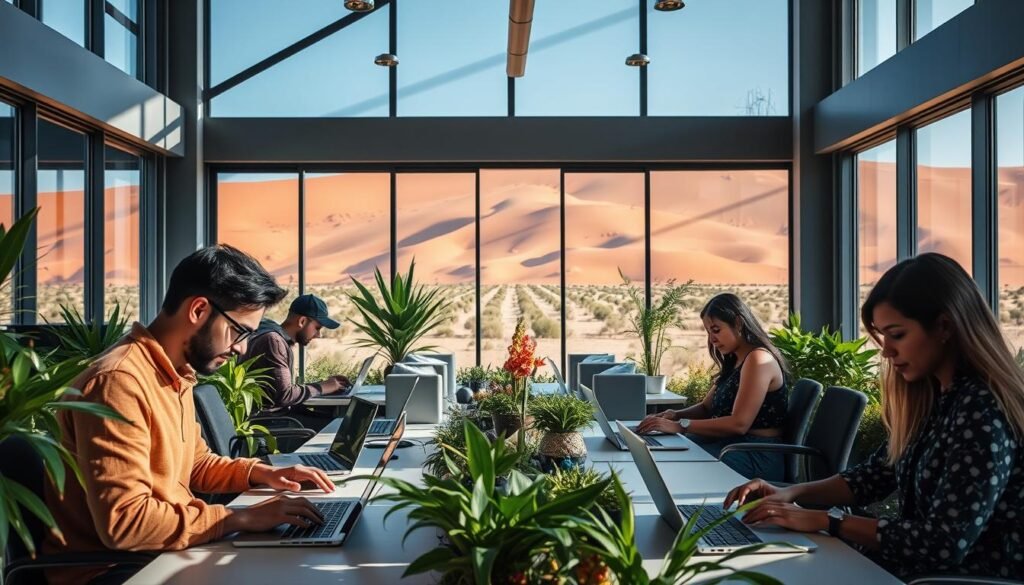
Internet Performance Across Regions
Windhoek delivers 20 Mbps averages—perfect for video calls. Coastal towns like Swakopmund fluctuate between 8-15 Mbps. For desert workers, satellite internet keeps you connected at 5 Mbps (enough for emails).
| Location | Download Speed | Best For |
|---|---|---|
| Windhoek CBD | 19.89 Mbps | Video conferences |
| Sossusvlei Lodges | 5.2 Mbps | Email/light browsing |
| Skeleton Coast | 1-3 Mbps | Offline work prep |
Smart Connectivity Solutions
MTC offers the widest coverage with 10GB data plans for N$159 ($8.70). Keep a TN Mobile SIM as backup—their LTE network saved me during outages. Pro tip: Buy SIMs at airport kiosks with your passport.
Urban Camp coworking space in Windhoek became my go-to with 24/7 access and private booths. Their 50 Mbps fiber made large file uploads take minutes, not hours.
- Power prep: Type D/M adapters are essential—find them at PEP Stores for N$45 ($2.50)
- Offline toolkit: Download maps, Google Docs, and Slack messages before desert trips
- Emergency backup: Rent a portable Wi-Fi router from Rent-A-Tech for N$80/day ($4.40)
“Switching between two SIM cards gave me 98% uptime during my 3-month stay—worth the extra time setting up.”
Conclusion: Is Namibia Your Next Nomad Base?
The visa allows remote workers to experience a unique lifestyle—if you’re ready for it. For six months, you’ll trade office walls for dunes and starlit workspaces. But weigh the opportunity against limited renewals and sparse amenities in remote areas.
This spot suits self-sufficient adventurers. Love desert silence and solar-powered Wi-Fi? Perfect. Need bustling cafés? Maybe not. Pack extra adapters, offline tools, and patience for slower internet outside cities.
The application process is straightforward, but the real test is adapting. As more remote workers discover this gem, communities are growing. If you crave freedom with wild backdrops, take the leap. Just double-check your six months plan—it flies by.
