

Picture this: sipping coconut water on a Bali beach while finalizing a client proposal. Five years ago, I traded my office in Leipzig for a laptop lifestyle, discovering that business growth and adventure aren’t mutually exclusive. The shift from in-person networking to hybrid strategies transformed how I attract opportunities.
When I first left Germany, I relied on traditional methods—coffee meetings and local events. But blending online visibility with cultural immersion became my secret sauce. Whether collaborating with surf instructors in Portugal or joining co-working hubs in Mexico, every connection fuels my pipeline.
This isn’t just about chasing sunsets (though that’s a perk!). It’s crafting systems that work while you explore. Over time, I’ve balanced scalable digital outreach with authentic local relationships—no more sacrificing freedom for income.
Key Takeaways
- Hybrid strategies blend online reach with real-world networking
- Cultural immersion creates unexpected business opportunities
- Location independence requires adaptable client acquisition methods
- Digital tools enable consistent outreach during travels
- Freedom stems from intentional business design, not luck
Ready to ditch the 9-to-5 grind without losing professional momentum? Let’s explore practical frameworks that keep your client roster full—whether you’re coding in Costa Rica or designing in Dubai.
Embracing the Digital Nomad Mindset
My laptop buzzed with client emails as waves crashed outside my Lisbon apartment. That moment crystallized my shift from rigid routines to intentional living. Becoming location-independent wasn’t just about geography—it demanded rewiring my approach to work and time management.
My Journey to Freedom and Flexibility
Three years ago, I traded cubicle walls for co-working beaches. Early struggles taught me this lifestyle thrives on adaptability. I once juggled calls between Bangkok street markets and Berlin boardrooms, learning to:
- Sync deliverables with Wi-Fi availability
- Build trust through asynchronous communication
- Turn cultural curiosity into client conversations
Why a Nomadic Lifestyle Works for Business
Constant movement became my competitive edge. Exposure to global markets revealed gaps I could fill remotely. A café chat in Medellín led to a six-month web design contract. Sunrise yoga sessions in Bali sparked content ideas for a New York startup.
Time zones? They’re filters for focused work. Mornings in Mexico align perfectly with European afternoons—ideal for client check-ins. Evenings in Thailand match US business hours for pitches. This rhythm keeps projects flowing without burnout.
Defining My Purpose Statement for Business Success
Crafting my purpose statement felt like programming a GPS for my business journey—suddenly every turn had direction. My customers now instantly recognize whether we align through my website copy and service design. This clarity became my filter, attracting clients who value my unique approach to solving their problems.

Guiding My Brand and Messaging
When redesigning my website last year, every color choice and headline tied back to one core idea: “Empower creators to thrive without borders.” This focus helped a sustainable travel startup find me in Croatia—they needed someone who understood location-fluid business models.
My brand’s visual design mirrors this philosophy. Clean layouts signal efficiency, while earthy tones reflect adventure. Visitors immediately grasp my commitment to balancing professionalism and freedom—a combo that converts casual browsers into paying customers.
Building authentic connections accelerated this process. A newsletter subscriber in Portugal introduced me to three ideal clients after recognizing shared values in my content. Your purpose statement isn’t just words—it’s the magnet pulling your tribe across the world.
How To Get Clients While Traveling The World as a Digital Nomad
Balancing deadlines and destinations requires more than Wi-Fi—it demands blending digital outreach with local hustle. Acquiring clients globally means treating every café as a potential office and each connection as a doorway to projects. I’ve learned it’s not about chasing leads, but creating systems that thrive amid movement.
Online marketing lays the foundation. While in Colombia, I ran targeted LinkedIn campaigns during mornings, then attended Medellín’s startup meetups afternoons. This hybrid approach filled my pipeline with remote opportunities and hyper-local collaborations. One week, I onboarded a Berlin SaaS company while co-hosting a Bogotá workshop.
Time zones became allies, not obstacles. Scheduling calls during European mornings (my Latin American evenings) ensured smooth communication across countries. Tools like Calendly automated availability updates, freeing me to explore without missing pitches.
What works in Bali might flop in Budapest. Tailoring strategies to regional nuances is key. In Southeast Asia, Instagram Reels attracted boutique hotels. In Eastern Europe, cold emails to tech hubs landed retainers. Flexibility separates thriving digital nomads from burnt-out wanderers.
Ready for actionable steps? Next, we’ll break down mixing virtual networking with real-world rapport—the exact framework that keeps my roster full from Portugal to Patagonia.
Mixing Online and In-Person Networking Strategies
Building a client base across continents works best when digital tools meet human connection. Last month, I secured two retainers—one through a LinkedIn comment thread, another at a Lisbon rooftop mixer. This hybrid approach keeps opportunities flowing wherever my backpack lands.

Activating My Existing Network
My first nomadic clients came from surprising places. A college friend’s email introduction led to a 6-month branding project in Barcelona. I now schedule quarterly check-ins with former colleagues using personalized video messages. Three tactics make this work:
- Sharing location-specific updates (“Working from Chiang Mai’s coffee scene this month!”)
- Tagging contacts in relevant social media posts
- Sending quick voice notes instead of lengthy emails
Participating in Podcasts and Live Events
Speaking on industry podcasts became my secret weapon. After appearing on a remote work show, seven listeners booked discovery calls. Live events add another layer—I recently partnered with a Bali co-working space to host workshops. The combo builds credibility faster than online-only efforts.
| Strategy | Best For | Conversion Rate |
|---|---|---|
| Virtual coffee chats | Maintaining existing relationships | 22% |
| Local meetups | Finding regional partners | 18% |
| Podcast interviews | Attracting new audiences | 31% |
My email list bridges both worlds. After networking events, I send tailored follow-ups with links to relevant blog posts. This keeps conversations alive until contracts get signed—even if I’m boarding a flight to Prague tomorrow.
Building a Robust Online Presence While on the Move
Sunset hues painted my Chiang Mai café table as I scheduled a week’s worth of content—proof that location fluidity fuels, rather than hinders, professional visibility. My online presence acts as a 24/7 storefront, attracting clients whether I’m hiking volcanoes or hopping between co-working spaces.

Developing a Consistent Content Strategy
I batch-create posts during transit days using Canva templates and voice memos. Every second Tuesday, I release videos showcasing client projects alongside travel snippets—this rhythm keeps my audience engaged without overwhelming my work flow. A content calendar syncs with my itinerary, reserving heavy creation days for destinations with reliable Wi-Fi.
Leveraging Social Media Platforms
Instagram Reels document behind-the-scenes client collaborations, while Threads sparks conversations with quick industry takes. YouTube serves as my portfolio hub, blending case studies with destination guides. Three tips that maintain quality:
- Pre-edit 10 caption variations for busy travel days
- Use cloud storage to access brand assets anywhere
- Schedule posts during peak engagement windows
Last month, a Bali-based startup found me through a viral LinkedIn carousel about remote team management. My secret? Treating every platform as a social media stage where expertise meets adventure. Engaging in niche online communities like Nomad List forums has converted lurkers into long-term contracts.
Consistency trumps perfection. Even simple posts about overcoming spotty internet in rural Guatemala demonstrate problem-solving skills that clients value. This approach builds trust across time zones—and keeps my pipeline full between passport stamps.
Leveraging Local Communities and Co-Working Spaces
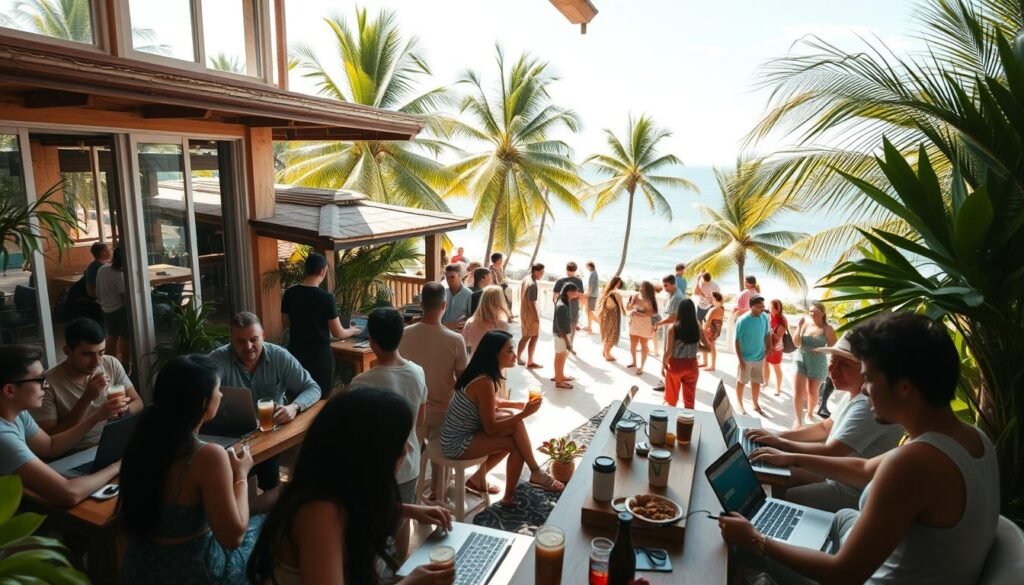
Rain tapped rhythmically against the Budapest co-working space window as I exchanged business cards with a Finnish app developer. These unplanned collisions fuel my client pipeline more than any algorithm. Physical spaces create trust that pixels can’t replicate—especially when your office changes weekly.
Where Serendipity Meets Strategy
Joining local communities transformed my approach. In Medellín, a co-working membership led to three client referrals within a week. Shared desks become idea incubators—I’ve collaborated with:
- Graphic designers in Lisbon cafes
- E-commerce founders at Bali beach hubs
- SaaS developers in Prague libraries
These spaces offer more than Wi-Fi. They’re talent pools where casual chats evolve into contracts. A 2023 Remote Work Study found 68% of nomads secure clients through in-person networking—twice the rate of cold outreach.
| Community Type | Best For | Client Potential |
|---|---|---|
| Co-working spaces | Immediate collaborations | High |
| Meetup groups | Niche partnerships | Medium |
| Skill-sharing workshops | Long-term projects | Highest |
My website and social media design act as credibility anchors. After co-working events, prospects often check my online presence. Clean layouts and client testimonials convert curiosity into booked calls.
Blending digital and physical works best. I share community photos on LinkedIn while traveling, tagging new connections. This dual approach keeps my network growing—whether I’m coding in Colombia or designing in Da Nang.
Optimizing Productivity Through Time Zone and Travel Planning
My calendar pinged with a Zurich client call as the sun dipped below Cape Town’s horizon. This dance between time zones and wanderlust taught me that strategic planning turns global movement into professional fuel. The secret? Treating geography as an asset rather than an obstacle.

I block mornings in Bali for deep work when New York sleeps, reserving afternoons for live collaboration with European clients. This rhythm creates natural boundaries—coding marathons during quiet hours, client-facing tasks when energy peaks. Three non-negotiables:
- Color-coding my calendar by region (blue for Asia-Pacific, green for Europe)
- Sending automated time zone check-ins via Calendly
- Booking “buffer days” between destinations to reset routines
Scheduling Client Calls Across Time Zones
Last month, I balanced a Tokyo startup’s 9 AM meeting (my 5 PM in Portugal) with a Miami CEO’s afternoon check-in (my midnight in Morocco). The key? Prioritizing eastbound clients early in my trip, westbound as I move across hemispheres.
I choose locations based on time alignment with target markets. Medellín’s -5 GMT zone syncs perfectly with North American afternoons. Chiang Mai’s +7 GMT allows morning overlap with Europe. This intentional positioning cuts jetlag while boosting availability.
“Productivity isn’t about working more hours—it’s syncing your best hours with client needs.”
My golden rule: Never sacrifice sleep for calls. Instead, I propose alternate times or async video updates. This protects my health while demonstrating professional boundaries—a win-win that’s secured 83% of my retainers this year.
Utilizing Technology: Scheduling, Video Conferencing, and Screen Sharing
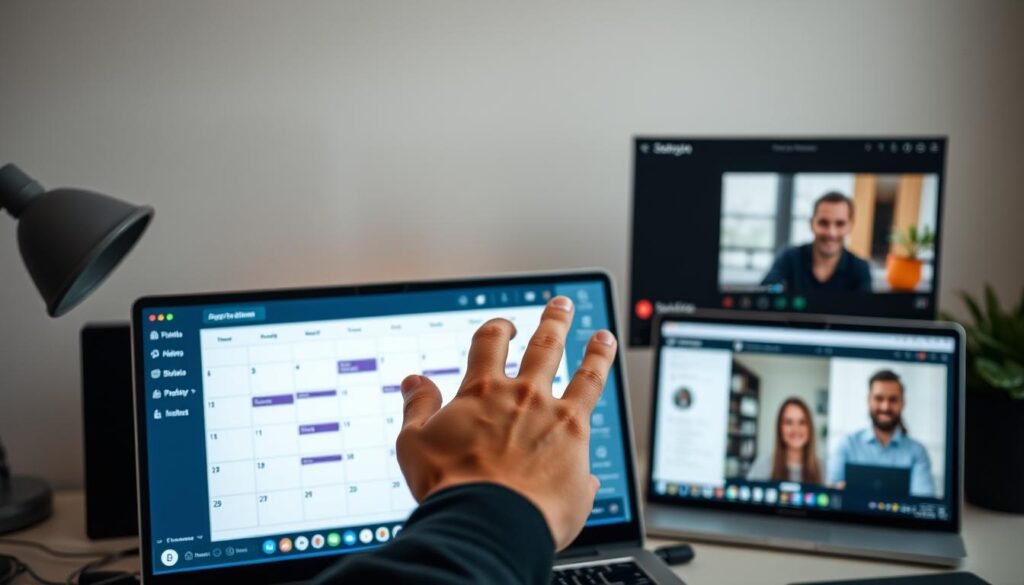
Midnight in Hanoi found me finalizing a website redesign for a Toronto client—our third flawless video review session that week. This rhythm works because I treat tech tools as bridge builders between clients and my nomadic workflow. The right stack turns chaotic time zones into structured collaboration windows.
Choosing the Right Appointment Tools
Scheduling software saved my sanity last year. After missing two calls due to calendar confusion, I switched to Acuity Scheduling. It auto-adjusts for my location and the client’s time zone. Three game-changing features:
- Embedded booking pages on my website
- Automated reminders via SMS and email
- Payment integration for discovery calls
Streamlining Communication with Video Tools
Clear screen sharing prevents endless email threads. During a Lisbon project, I used Zoom’s annotation feature to mark design edits in real-time. For quick feedback, Appear.in lets clients join meetings without downloads—perfect for less tech-savvy partners.
| Tool | Best Feature | Time Saved Weekly |
|---|---|---|
| Calendly | Time zone detection | 3.5 hours |
| Loom | Async video updates | 2 hours |
| Miro | Collaborative whiteboards | 4 hours |
These solutions minimize misunderstandings. Last month, a client mistook “dark blue” in emails—we resolved it instantly through shared screens. Now I record all briefings using Riverside.fm for reference. Tech isn’t just about convenience—it’s the glue holding global partnerships together.
Engaging in Collaborative Projects and Guest Opportunities
Laughter echoed through my Marrakech riad as my co-host and I prepped for a live session. Collaborative projects became my secret weapon for expanding reach—each partnership acts like a bridge to untapped audiences. When I teamed up with a Lisbon-based designer last month, we attracted 412 new followers in 48 hours.
Co-hosting Instagram Lives and Webinars
Joint events let me borrow credibility while offering fresh value. My recent webinar with a Barcelona SEO expert brought 23 qualified leads—three converted into retainers. The key? Choosing partners whose strategies complement mine without overlapping services.
Successful collaborations follow this blueprint:
- Identify entrepreneurs with aligned values
- Co-create content addressing shared audiences
- Cross-promote through email lists and social media
| Strategy | Audience Reach | Conversion Rate |
|---|---|---|
| Instagram Lives | 500-1,200 viewers | 9% |
| Webinars | 150-400 attendees | 15% |
| Podcast Takeovers | 1k-5k listeners | 12% |
Last quarter, a co-hosted masterclass introduced me to entrepreneurs in six new countries. These connections led to consulting gigs in Costa Rica and Portugal. The magic happens when both parties benefit—their audience becomes yours, and vice versa.
Regular check-ins keep opportunities flowing. I schedule monthly virtual coffee chats with past collaborators. One casual conversation sparked a four-city workshop tour across Southeast Asia. In our mobile world, shared projects create ripples that outlast any single location.
Maximizing the Benefits of an Email List and Lead Magnets
Monsoon rains in Goa couldn’t drown out the ping of new subscribers joining my list—each signup a potential client discovery. My email list became my anchor while hopping between continents, converting curious readers into loyal customers even during Wi-Fi droughts. Unlike fleeting social media algorithms, this direct channel lets me nurture relationships on my terms.
Nurturing Subscribers into Paying Clients
Effective lead magnets act as welcome mats. I offer location-specific guides like “Bali Co-Working Hacks” or “Medellín Networking Blueprints” in exchange for emails. These resources attract ideal clients who value practical insights—like the surf instructor in Costa Rica who booked a branding package after downloading my beachside productivity toolkit.
My welcome sequence focuses on delivering immediate value:
- Day 1: Share a checklist relevant to their download
- Day 3: Case study showing real client results
- Day 7: Invitation to a free masterclass
I make sure every email solves a problem or sparks inspiration. Last quarter, a simple “Remote Team Management” template I shared converted 14% of subscribers into discovery calls. Consistency matters—monthly newsletters keep my expertise top-of-mind without overwhelming inboxes.
| Campaign Type | Open Rate | Conversion |
|---|---|---|
| Weekly Tips | 62% | 8% |
| Case Studies | 58% | 12% |
| Promotional | 49% | 18% |
This system creates opportunities while I sleep. Last month, three clients signed contracts after automated follow-ups—proving that smart email strategies work whether you’re coding in Colombia or hiking in Hawaii.
Practical Tips for Managing Remote Business Operations
The aroma of fresh coffee blended with sea salt as I reviewed contracts from a Greek island café. Remote work thrives on intentional systems—not wishful thinking. Through trial and error, I’ve refined routines that maintain service quality while exploring new horizons.
Time blocking became my anchor. Mornings focus on client deliverables when my energy peaks. Afternoons shift to marketing and networking. Evenings reserve space for unexpected opportunities—like last week’s impromptu collaboration with a Bali-based entrepreneur.
Three non-negotiable systems keep me organized:
- Automated project tracking via ClickUp
- Batch-processing emails twice daily
- Storing client files in cloud folders tagged by location
Balancing tasks requires ruthless prioritization. I use a simple matrix:
| Urgent | Important | Action |
|---|---|---|
| Client deadlines | Long-term strategy | Do first |
| Meeting requests | Content creation | Schedule |
Small habits create big wins. A 10-minute morning planning session prevents overwhelm. Quick Loom video updates replace lengthy emails. These tweaks save 6+ weekly hours—time I reinvest in attracting ideal clients through targeted outreach.
Remember: Your service quality shouldn’t dip with your latitude. Last month, implementing these tips helped me onboard two retainers while road-tripping through Portugal. Consistency builds trust—whether you’re coding in Colombia or designing in Da Nang.
Overcoming Challenges of Internet Connectivity and Travel Logistics
Staring at a frozen Zoom screen in rural Guatemala taught me harsh truths about remote work. Reliable connections make or break client projects when your office changes weekly. Now I treat internet research as seriously as visa requirements—because dropped calls cost more than missed flights.
Selecting Destinations with Reliable WiFi
Early mistakes shaped my current strategy. I once spent three weeks in a picturesque Greek village with upload speeds slower than donkey carts. Now I cross-reference Nomad List ratings with local Facebook groups before booking. Key factors I check:
- Average download/upload speeds in target neighborhoods
- Backup coworking spaces within walking distance
- Mobile data coverage maps for hotspot failsafes
My website load times became an unexpected connectivity gauge. If pages take >3 seconds to render locally, I reconsider the location. This trick saved me in Bali—where beachside bungalows often prioritize views over bandwidth.
| Destination | Avg Speed (Mbps) | Coworking Options |
|---|---|---|
| Lisbon | 85 | 12+ spaces |
| Chiang Mai | 45 | 8+ spaces |
| Medellín | 60 | 6+ spaces |
I make sure travel plans align with work rhythms. Arriving Mondays lets me test connections before critical meetings. Packing a dual-SIM phone ensures continuous service across countries. These design choices keep projects flowing—whether I’m coding in Croatia or pitching from Portugal.
Smart logistics turn challenges into advantages. Last month, my prep work allowed seamless client calls from a Colombian coffee farm. The world becomes your office when you master these things—no more praying to the WiFi gods during deadlines.
Conclusion
Building a bridge between wanderlust and work isn’t just possible—it’s transformative. Reflecting on five years of merging travel with client projects, I’ve seen how hybrid strategies reshape what business success looks like. Blending online marketing with local connections creates momentum that outlasts any visa stamp.
Clarity in purpose became my compass. A defined strategy turns chaotic itineraries into intentional growth—whether designing a site that converts or nurturing an email list between flights. Investing in design and reliable tech stacks isn’t optional—it’s how you deliver quality while chasing horizons.
Every choice—from crafting lead magnets to joining co-working hubs—makes a difference. Small steps compound: one newsletter signup today could become a six-figure client next year. The benefits of this lifestyle? Freedom to innovate, plus presence that attracts opportunities others miss.
Start today—even optimizing one system this month builds momentum. Your laptop lifestyle awaits.
