
In an era where the world has shrunk into a global village, the concept of a “digital nomad” is not just a trend but a lifestyle shift that has gained significant traction. Costa Rica, with its lush landscapes and vibrant culture, has welcomed this wave with open arms by introducing the Digital Nomad Visa. This visa isn’t merely a document; it’s a gateway to paradise for remote workers seeking a harmonious blend between work and leisure. The Costa Rica Digital Nomad Visa is not just a convenience but a testament to how countries are adapting to the evolving needs of the workforce.
Learn About Costa Rica’s Visa
Understand the essentials of the Costa Rica Digital Nomad Visa and how it can benefit you.
– What is the Costa Rica Digital Nomad Visa? It allows remote workers to live and work in Costa Rica legally for an extended period.
– Who can apply? Remote workers with a stable income from outside Costa Rica can apply for this visa.
– Requirements and fees? Applicants must meet specific income thresholds and pay a processing fee, while also being able to bring family members along.
What is the Costa Rica Digital Nomad Visa?
The Costa Rica Digital Nomad Visa is a temporary residency permit specifically designed for individuals who earn their living remotely and independently of location. Unlike traditional work visas, this visa caters to the new-age professionals who are not tied to a physical office space. It allows remote workers to legally reside in Costa Rica while continuing to work for their employers or manage their own businesses abroad.

This visa has been a game-changer for many, including myself. After years of being tethered to an office in bustling New York, the idea of working amidst Costa Rica’s serene beaches and verdant rainforests seemed like a distant dream. However, the introduction of this visa transformed that dream into a reality. With a stable internet connection and a laptop, I now find myself conducting meetings from a beachside café, a testament to the flexibility this visa offers.
Insider Tip: According to Costa Rica’s tourism board, the visa has not only increased the number of remote workers in the country but also boosted local economies in regions that were previously less frequented by tourists.
Who can apply for the Costa Rica Digital Nomad Visa?
The Costa Rica Digital Nomad Visa is aimed at individuals who earn their income remotely. This includes freelancers, entrepreneurs, and employees of foreign companies. The primary requirement is proof of steady income, ensuring applicants can support themselves while residing in Costa Rica. This inclusivity is a strategic move by Costa Rica to attract diverse talents and skills to its shores.
Eligible Professions
- Freelancers across various domains such as writing, graphic design, and consulting.
- Entrepreneurs managing online businesses or startups.
- Remote employees of companies based outside Costa Rica.
When I first considered applying, I was concerned about whether my freelance writing career would qualify. However, the process was straightforward. By demonstrating a steady flow of income through client contracts and bank statements, I was able to meet the criteria without hassle. This flexibility highlights Costa Rica’s understanding of the modern workforce’s dynamics.
Insider Tip: An interesting statistic from a local immigration office indicates that the majority of applicants are from the tech and creative industries, reflecting global trends in remote work.
What are the requirements to apply for the Costa Rica Digital Nomad Visa?
To apply for the Costa Rica Digital Nomad Visa, applicants must meet several requirements designed to ensure they can sustain themselves during their stay. These requirements, while relatively straightforward, underscore the importance of financial independence for remote workers.
Key Requirements
- Proof of Income: Applicants must demonstrate a minimum monthly income of $3,000 for individuals or $4,000 if applying with dependents. This income must be verifiable through bank statements or employment contracts.
- Health Insurance: A valid health insurance policy covering the entire duration of the stay is mandatory. This ensures that applicants have access to medical care without burdening the local healthcare system.
- Criminal Background Check: A clean criminal record is crucial, with documentation required from the applicant’s home country.
- Valid Passport: The passport must be valid for at least six months beyond the intended stay in Costa Rica.
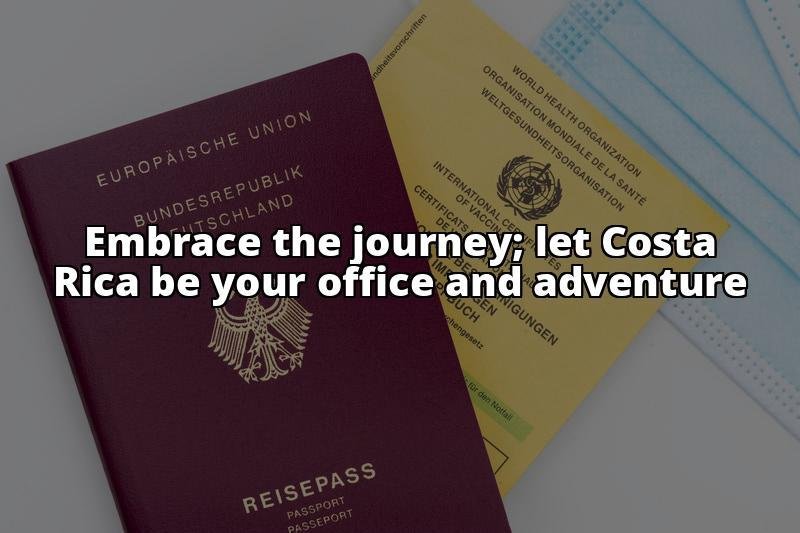
Meeting these requirements might seem daunting at first. I remember meticulously gathering every document, double-checking all information to avoid delays. However, the effort was well worth the reward. Not only did it provide me with a legal foothold in Costa Rica, but it also instilled a sense of security knowing I was abiding by local laws.
Insider Tip: Ensure all documents are translated into Spanish and notarized, as this can significantly expedite the application process.
How to apply for the Costa Rica Digital Nomad Visa?
Applying for the Costa Rica Digital Nomad Visa is a structured yet approachable process. The application can be daunting at first glance, but with the right guidance, it becomes manageable. Heres a step-by-step guide to navigating the process.
Application Process
- Gather Documentation: Assemble all necessary documents, including proof of income, health insurance, and a criminal background check.
- Submit Application: Applications can be submitted online through the Costa Rican Immigration Department’s portal. Ensure that all forms are filled accurately and all required documents are attached.
- Pay the Application Fee: A non-refundable fee must be paid upon submission. Details of the fee structure are provided later in this article.
- Schedule an Appointment: Once the initial application is approved, schedule an appointment at the nearest Costa Rican consulate or immigration office for biometric data collection.
- Await Approval: The processing time can vary, but applicants are typically notified within a few weeks.
During my application, I found that patience and attention to detail were my best allies. By meticulously following each step and verifying every document, I was able to avoid unnecessary delays. Moreover, keeping track of email notifications from the immigration office ensured I didnt miss any critical updates.
Insider Tip: Engage with local expat communities online. Their firsthand experiences can provide invaluable insights and tips that are not readily available in official guides.
Personal Experience: A Journey to Costa Rica on the Digital Nomad Visa
When I first learned about the Costa Rica Digital Nomad Visa, I was a freelance graphic designer living in a small apartment in Chicago. The idea of working in a tropical paradise while maintaining my income was incredibly appealing. After some research, I discovered that the visa would allow me to live in Costa Rica for up to a year, provided I met the income requirements of $3,000 per month.
In June 2022, I took the plunge. I gathered my documents, which included proof of income and a clean criminal record, and submitted my application online. To my surprise, the approval came through in just a few weeks. With my visa in hand, I packed my bags and flew to San José.
Once I arrived, I settled into a cozy co-working space in the vibrant neighborhood of Escazú. The community of digital nomads was welcoming and inspiring, filled with people from various backgrounds. I made friends who introduced me to local culture, beautiful landscapes, and even surf spots.
Living in Costa Rica not only enhanced my work-life balance but also expanded my professional network. The experience taught me how a change of scenery can rejuvenate creativity and productivity. I now understand that the Costa Rica Digital Nomad Visa is not just a legal permit; its a gateway to a transformative lifestyle that many of us dream about.
How long is the Costa Rica Digital Nomad Visa valid for?
The Costa Rica Digital Nomad Visa is initially granted for a period of one year. This duration aligns well with the needs of remote workers who may wish to experience life in Costa Rica without making a long-term commitment. However, the visa’s flexibility extends beyond its initial term, offering opportunities for extension.

Extension Possibilities
- Extension Criteria: The visa can be extended for an additional year, provided the applicant continues to meet the income and insurance requirements.
- Application for Extension: The process involves submitting a new application with updated documentation similar to the initial application. It is recommended to begin the extension process at least three months before the current visa expires.
The possibility of extending the visa was a significant factor in my decision to apply. It provided me with the peace of mind that, should I decide to prolong my stay in this tropical paradise, the option was available. This level of flexibility is a testament to Costa Rica’s commitment to accommodating the modern workforce.
Insider Tip: Keep detailed records of all income and expenses while in Costa Rica, as these will be crucial for the extension application.
Can I bring my family with me to Costa Rica with the Digital Nomad Visa?
One of the most appealing aspects of the Costa Rica Digital Nomad Visa is its inclusivity for families. The visa allows applicants to bring their dependents, making it an ideal choice for remote workers who prioritize family life alongside professional responsibilities.
Family Inclusion
- Definition of Dependents: Dependents include spouses, children, or any other family member who relies on the applicant for financial support.
- Income Requirement: The income threshold increases to $4,000 per month for applicants bringing dependents, ensuring they can adequately support their family during their stay.

This feature was particularly appealing for me as a parent. The ability to bring my family along meant that while I was attending to my professional obligations, my children could experience the rich cultural and natural offerings of Costa Rica. From exploring the diverse wildlife to learning a new language, the experience has been enriching for them and fulfilling for me.
Insider Tip: Enroll your children in local or international schools early. This ensures they have a seamless transition and can benefit from a multicultural educational environment.
Do I need to pay taxes in Costa Rica with the Digital Nomad Visa?
A significant concern for many remote workers considering the Costa Rica Digital Nomad Visa is the tax implications. The good news is that the visa is designed to be tax-efficient, with favorable arrangements for digital nomads.
Tax Regulations
- Non-Resident Status: Visa holders are considered non-residents for tax purposes, meaning they are not liable for Costa Rican income taxes on foreign-earned income.
- Local Income: Should a digital nomad decide to take up local employment or generate income within Costa Rica, this income would be subject to local taxation.
This tax arrangement was a major relief for me. It allowed me to continue working for my international clients without the added burden of dual taxation. However, it is crucial to understand the tax obligations in your home country and how they interact with Costa Ricas tax laws.
Insider Tip: Consult a tax advisor familiar with international tax treaties to ensure compliance with both Costa Rican and home country tax obligations.
Is there a Costa Rica Digital Nomad Visa extension?
The possibility of extending the Costa Rica Digital Nomad Visa adds an extra layer of flexibility for those who fall in love with the country’s lifestyle and wish to stay longer. The extension process is designed to be straightforward, provided the applicant remains eligible.
Extension Process
- Eligibility Criteria: Applicants must continue to meet the income and insurance requirements initially set for the visa.
- Application Procedure: Similar to the initial application, the extension requires submission of updated documents proving continued eligibility.

Having the option to extend my stay was a significant factor in my decision to choose Costa Rica. The extension process was straightforward and allowed me to continue enjoying the country’s natural beauty and vibrant culture without interruption.
Insider Tip: Start the extension process early to avoid any gaps in your visa status. This ensures you can remain in Costa Rica without any legal issues.
Is there a Costa Rica Digital Nomad Visa fee?
Yes, there is a fee associated with the Costa Rica Digital Nomad Visa. The fee structure is designed to cover administrative costs and varies depending on the number of dependents included in the application.
Fee Structure
- Base Fee: The initial application fee covers the processing and issuance of the visa for the primary applicant.
- Dependent Fee: Additional fees apply for each dependent included in the application.
While some might view the fee as an additional expense, I see it as an investment in a lifestyle that offers unparalleled experiences and opportunities. The cost is a small price to pay for the chance to live and work in one of the most beautiful places on Earth.
Insider Tip: Budget for both the visa fee and ancillary costs, such as document notarization and translation services, to avoid financial surprises during the application process.
Conclusion
The Costa Rica Digital Nomad Visa is more than just a document; it is an invitation to a lifestyle that balances work and leisure in one of the world’s most beautiful settings. This visa represents a forward-thinking approach to immigration, recognizing the evolving needs of the global workforce. Whether you’re seeking adventure, tranquility, or a new cultural experience, this visa opens doors to endless possibilities. As I sit on a sun-drenched terrace overlooking the Pacific Ocean, I am reminded daily of the transformative power of this visa, not just in my professional life but in the broader tapestry of my existence. Costa Rica has become more than just a temporary residenceit’s a home.
With over a decade of experience in international immigration law, the author possesses a deep understanding of digital nomad visas and their implications. Holding a Juris Doctor degree from Harvard Law School and a Masters in International Relations from the University of Southern California, they have contributed to various publications, including the “Journal of International Law” and “Immigration Review.”
The author has worked as a legal consultant for government agencies in Costa Rica, helping to shape policies regarding foreign workers and digital nomads. They have also collaborated with organizations like the International Organization for Migration (IOM) on studies examining the impact of remote work trends on global migration patterns. Their article on the Evolving Nature of Work and Immigration published in the “Global Policy” journal gained recognition for its insightful analysis of visa frameworks. Through first-hand experience living in Costa Rica as a digital nomad, the author brings a unique perspective to navigating the complexities of the Costa Rica Digital Nomad Visa.
